



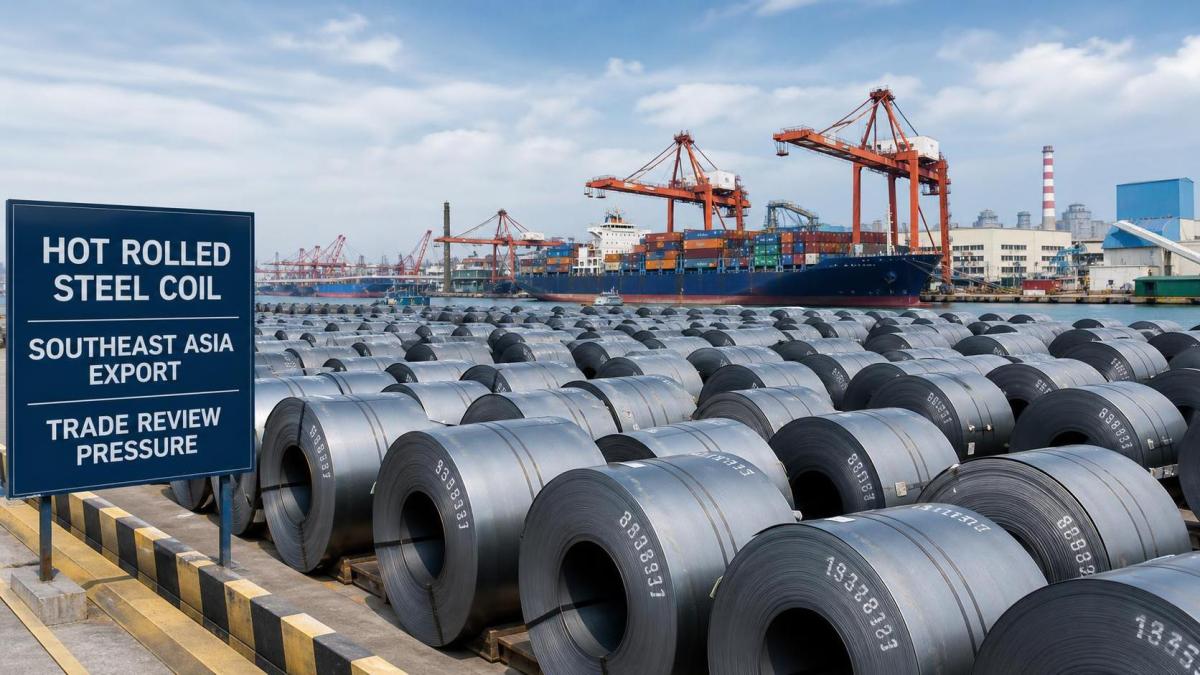
On July 27, 2026, Vietnam moved forward with a midterm anti-dumping review covering Chinese hot-rolled coil, turning a trade remedy procedure into an immediate compliance and market-access issue for steel exporters, buyers, distributors, and supply-chain service providers active in Southeast Asia. The development matters not only because it targets a remaining export route into ASEAN, but also because it arrives alongside local price cuts in Vietnam and lower-priced inflows from India and Indonesia, increasing pressure on both price competitiveness and rule-based market entry.
A Defined Trade Measure Is Now Back in Focus
The confirmed facts are limited but material. Vietnam's Ministry of Industry and Trade formally initiated a midterm anti-dumping review on Chinese hot-rolled coil on July 27, 2026. The review covers 27 HS codes, and a final determination is expected within six months. Based on the event summary provided, the move directly affects one of the remaining channels for Chinese steel exports into the ASEAN market. The same summary also indicates that the review is unfolding while Vietnamese domestic mills are cutting prices and lower-priced resources from India and Indonesia are entering the market.
Where the Pressure Is Likely to Appear First
Export transactions face a narrower margin for error
From an industry perspective, Chinese steel exporters are the most directly exposed because the review concerns access conditions for goods already identified by HS classification. The main pressure point is no longer only sales pricing, but also whether shipments, declarations, and product positioning remain aligned with the categories under review. What deserves closer attention is the handling of product scope, customs coding, contract terms, and supporting trade documents during the review period.
Buyers and distributors may reassess sourcing assumptions
Importers, stockists, and distribution channels in the regional market may be affected because a live review changes the level of uncertainty around future landed cost and supply continuity. Analysis shows that this can influence order timing, supplier selection, and acceptance of contract terms tied to shipment windows or price validity. For these market participants, the practical issue is whether procurement plans remain viable if compliance requirements tighten or if the commercial gap widens against competing supply from Vietnam, India, or Indonesia.
Processors and manufacturers may need closer document discipline
For downstream processors and manufacturing users of hot-rolled coil, the effect is more operational than headline-driven. If reviewed products are tied to specific HS codes, then technical descriptions, order specifications, inspection records, and shipping documents become more important in demonstrating that procurement and delivery align with declared product categories. Observably, any mismatch between technical paperwork and trade documentation can become a commercial risk even before a final determination is issued.
Logistics and trade service providers will have a larger verification role
Supply-chain service providers, including parties involved in customs handling and shipment coordination, may also feel the impact because review-based trade measures often increase the importance of document accuracy and timing control. The operational concern here is not a confirmed rule change beyond the review itself, but the need to monitor whether official wording, customs treatment, or customer requirements shift during the six-month process.
What Companies Should Watch During the Review Window
Keep product scope and HS-code mapping under review
Analysis shows that the first practical task is to verify whether current or planned shipments fall within the 27 HS codes identified in the review. Companies should pay closer attention to internal product classification, sales descriptions, and customs-facing documentation so that commercial teams and trade teams are working from the same scope definition.
Track official language and execution signals, not only market prices
It is more appropriate to understand this development as an active rule process rather than a completed enforcement outcome. That means exporters and buyers should monitor subsequent official statements, procedural updates, and any changes in how the review is described or applied. The immediate risk is not only price competition, but also misreading the direction of the review while continuing business on old assumptions.
Recheck contract, delivery, and procurement timing
Because a final determination is expected within six months, companies with rolling procurement or shipment schedules should review exposure across that period. Observably, delivery windows, quotation validity, and supplier commitments may require closer coordination where orders depend on market access certainty or where replacement sourcing is difficult.
Strengthen traceability across technical and trade files
What deserves closer attention is the consistency between technical documents and commercial paperwork. Product specifications, testing records, inspection documents, and shipment files may become more important if customers, intermediaries, or service providers begin requesting stronger evidence to support classification, origin-related review, or delivery acceptance decisions. The event summary does not provide detailed execution rules, so this remains a risk-control observation rather than a confirmed new requirement.
Why This Looks More Like an Execution Signal Than a Closed Outcome
Analysis shows that the July 27 action should be read as a meaningful execution signal, but not yet as a fully settled market result. The review has been formally launched, the product scope has been defined through 27 HS codes, and the timeline toward a final determination has been indicated. At the same time, the available facts do not establish the final treatment, the exact downstream implementation approach, or the extent of commercial adjustment by market participants. That is why continued attention to official follow-up, customer-side procurement behavior, and changes in tender or specification language remains necessary.
How the Market Is Most Rationally Understood at This Stage
The industry significance of this event lies in the combination of trade remedy review and pricing pressure within the same regional market window. For companies connected to Chinese hot-rolled coil exports, Southeast Asian distribution, or related procurement chains, the issue is not simply that a review has started, but that market entry and price competitiveness are now being tested at the same time. At this stage, it is more appropriate to understand the development as a live compliance and trade-access risk that requires monitoring, rather than as a final rule outcome with fully known consequences.
Basis of This Article and What Still Needs Verification
This article is based on the user-provided news title, event date, and event summary. For events of this type, commonly relevant source categories include official notices, releases from regulatory authorities, customs or trade-administration information, industry association updates, standard-setting documents, and reporting by established business or industry media. A specific official source link was not provided in the input, so the underlying publication path still needs to be verified on an ongoing basis. Further observation is also needed regarding follow-up procedural detail, implementation language, possible changes in tender or purchasing documents, industry feedback, and how affected companies adjust execution in practice.
By clicking 'Allow All', you agree to the storage of cookies on your device to enhance site navigation, analyze site usage and assist with our marketing efforts. Coo Cookie Notice