


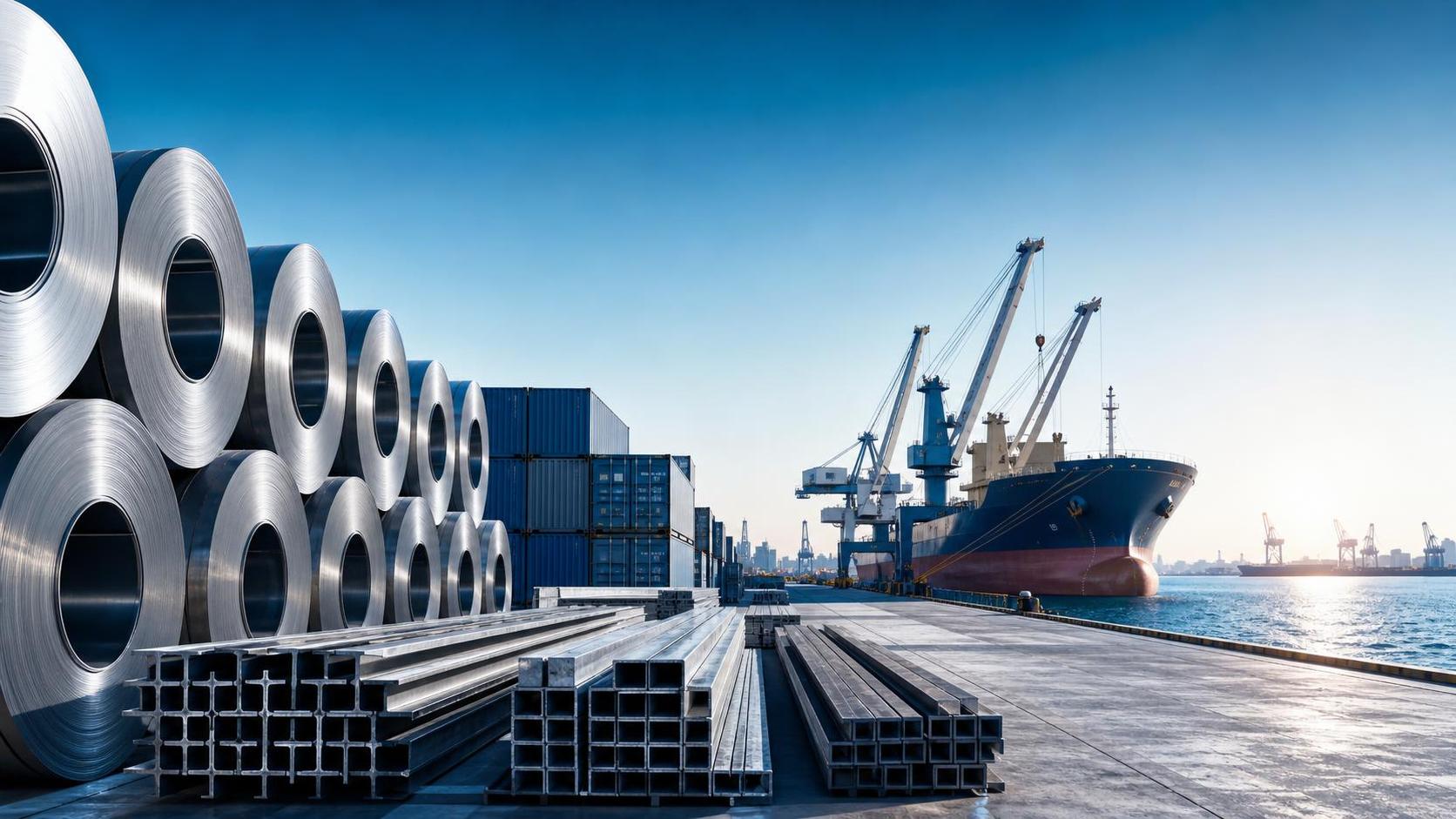
On August 7, 2026, the latest customs data and research figures indicated that China’s steel exports remained at a high level, with August expected to stay around the 10-million-ton mark even as external pressure persists. For exporters, overseas buyers, distributors, and supply chain operators, this matters because the current price gap in hot-rolled coil is still supporting order competitiveness, while new policy moves in Europe and the United States and additional trade remedy investigations in multiple markets are limiting how far shipments can expand.
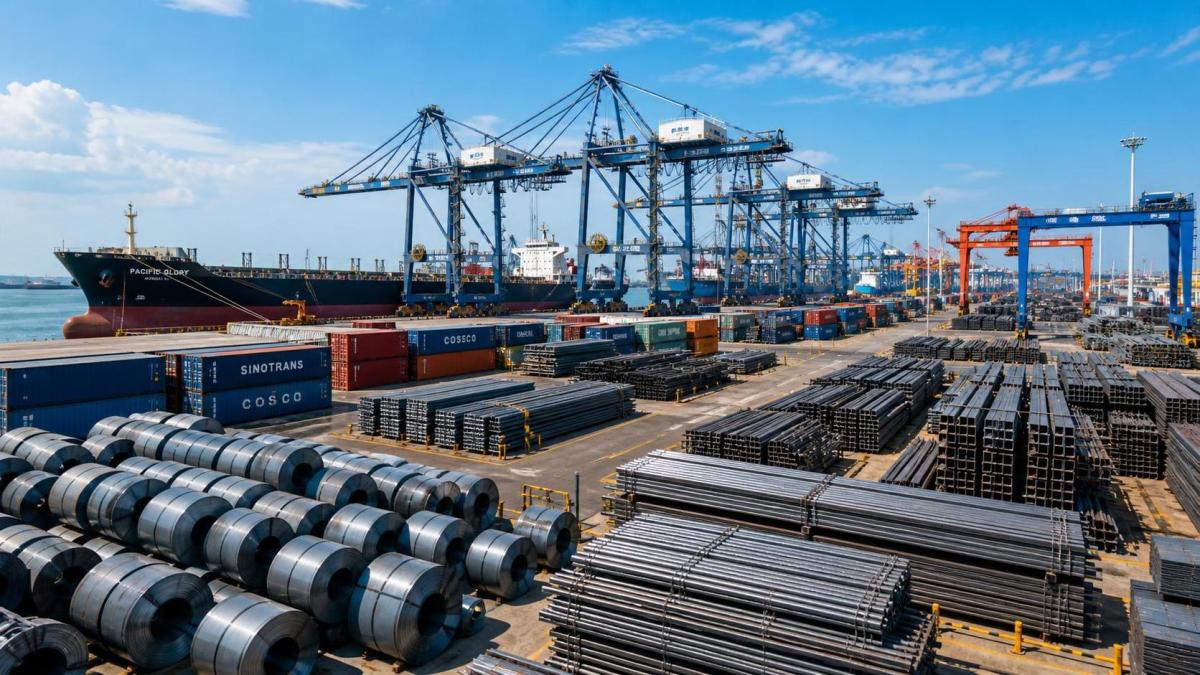
High Export Volume Continues Despite External Pressure
According to the latest data cited from the General Administration of Customs and Lange Steel Research Center, China exported 10.121 million tons of steel in July 2026, up 2.9% year on year. Cumulative exports for January through July reached 64.995 million tons.
The same information indicates that export performance in August is continuing at a high but pressured level, with the monthly total expected to remain in the range of 10 million tons.
In hot-rolled coil, the reported overseas price gap remains notable. China’s FOB quotation was listed at US$483 per ton, which was US$62 per ton lower than Japan and US$125 per ton lower than Turkey.
The summary also states that this price advantage is providing relatively stable cost support for small and medium-sized overseas buyers. At the same time, the implementation of new policies in Europe and the United States, along with newly added trade remedy investigations in multiple countries, continues to constrain room for further export expansion.
Where the Impact Is Most Immediate
Export order management faces a mixed operating environment
From an industry perspective, direct trading companies are likely to feel the impact first because high shipment levels and visible price competitiveness can still support customer interest, especially where buyers are focused on procurement cost. What deserves closer attention is that policy and trade remedy pressure may affect order conversion, destination selection, and contract execution rhythm rather than simply headline demand.
Overseas buyers may focus more on cost stability than volume growth
For overseas purchasers, particularly small and medium-sized buyers referenced in the summary, the current hot-rolled coil spread suggests that Chinese supply continues to offer a cost advantage. Analysis shows that the practical impact is likely to be strongest in sourcing decisions, supplier comparisons, and near-term replenishment planning. Buyers will need to watch whether trade restrictions begin to outweigh the current pricing benefit in specific markets.
Distributors and processors need closer attention to market access conditions
Channel distributors and downstream processors may be affected through product flow and delivery planning. Observably, a high export base does not automatically translate into easier circulation in every destination market, because trade remedy investigations and new policy implementation can alter customs treatment, documentation requirements, or customer willingness to place new orders.
Supply chain service providers may see higher compliance sensitivity
Logistics providers, documentation service firms, and other supply chain participants are likely to face more scrutiny around execution details. The issue is not only shipment volume, but also whether transactions can proceed smoothly under changing external rules. This makes compliance review, document accuracy, and timing coordination more relevant to daily operations.
Operational Signals Companies Should Watch Now
Separate price advantage from actual market access
Analysis shows that the current export story has two sides: price remains competitive, but market access conditions are becoming more restrictive. Companies should avoid treating the hot-rolled coil spread alone as a sufficient basis for expansion and instead track whether policy changes or trade cases are affecting actual deal closure in target markets.
Pay closer attention to destination-market rule changes
What deserves closer attention is the implementation effect of new policies in Europe and the United States, as well as added trade remedy investigations in multiple countries. In practice, this means export teams and sales staff should follow changes in official wording, enforcement timing, and customer-side responses rather than relying only on broad market sentiment.
Strengthen documentation and execution discipline
For firms already shipping at scale, the more immediate concern may be contract fulfillment quality. Observably, when external scrutiny rises, supplier qualifications, trade documents, delivery schedules, and communication records can become more important in cross-border transactions. That makes internal coordination across sales, logistics, and compliance functions worth watching closely.
Review customer communication and contingency planning
Companies serving overseas buyers should also prepare for slower decision cycles or additional questions from customers. Analysis shows that even when the cost advantage remains intact, customers may seek more clarity on delivery reliability, documentation readiness, and possible policy-related disruption before finalizing orders.
Why This Looks More Like a Tense Balance Than a Clear Breakout
Observably, this development does not point to unrestricted export growth. It is more appropriate to understand this as a period in which strong price competitiveness is helping China maintain high export volume, while policy and trade barriers are preventing that advantage from translating into a much wider expansion.
From an industry perspective, the most important signal is the coexistence of resilience and constraint. The data show that shipment levels remain elevated, but the summary also makes clear that external restrictions are still shaping the ceiling for further growth. That means the market should continue to watch both pricing and regulatory developments together, rather than reading volume alone as a standalone trend.
How to Read the Current Signal
The latest information suggests that China’s steel export market is still being supported by a meaningful international price gap, especially in hot-rolled coil, and this is helping keep monthly shipments near the 10-million-ton level. At the same time, the operating environment remains pressured by new policies and trade remedy actions abroad.
A balanced reading is that this is neither a simple short-term fluctuation nor a fully settled long-term outcome. It is more appropriate to understand this as an ongoing industry dynamic: export competitiveness remains visible, but its practical conversion into additional volume will continue to depend on how external trade restrictions evolve.
Basis of This Article and What Still Needs Verification
This article is based on the user-provided news title, event date, and summary information. The facts cited here rely on the provided description referencing the General Administration of Customs and Lange Steel Research Center data.
For this type of industry update, commonly relevant source categories may include official customs releases, company disclosures, industry association updates, authoritative media coverage, and standard-setting or regulatory documents. A specific official source link was not provided in the input, so further verification is still necessary.
Areas that merit continued follow-up include whether August export volume ultimately remains at the expected level, how new policy implementation in Europe and the United States develops in practice, and whether additional trade remedy investigations materially affect transaction execution in specific markets.
By clicking 'Allow All', you agree to the storage of cookies on your device to enhance site navigation, analyze site usage and assist with our marketing efforts. Coo Cookie Notice