


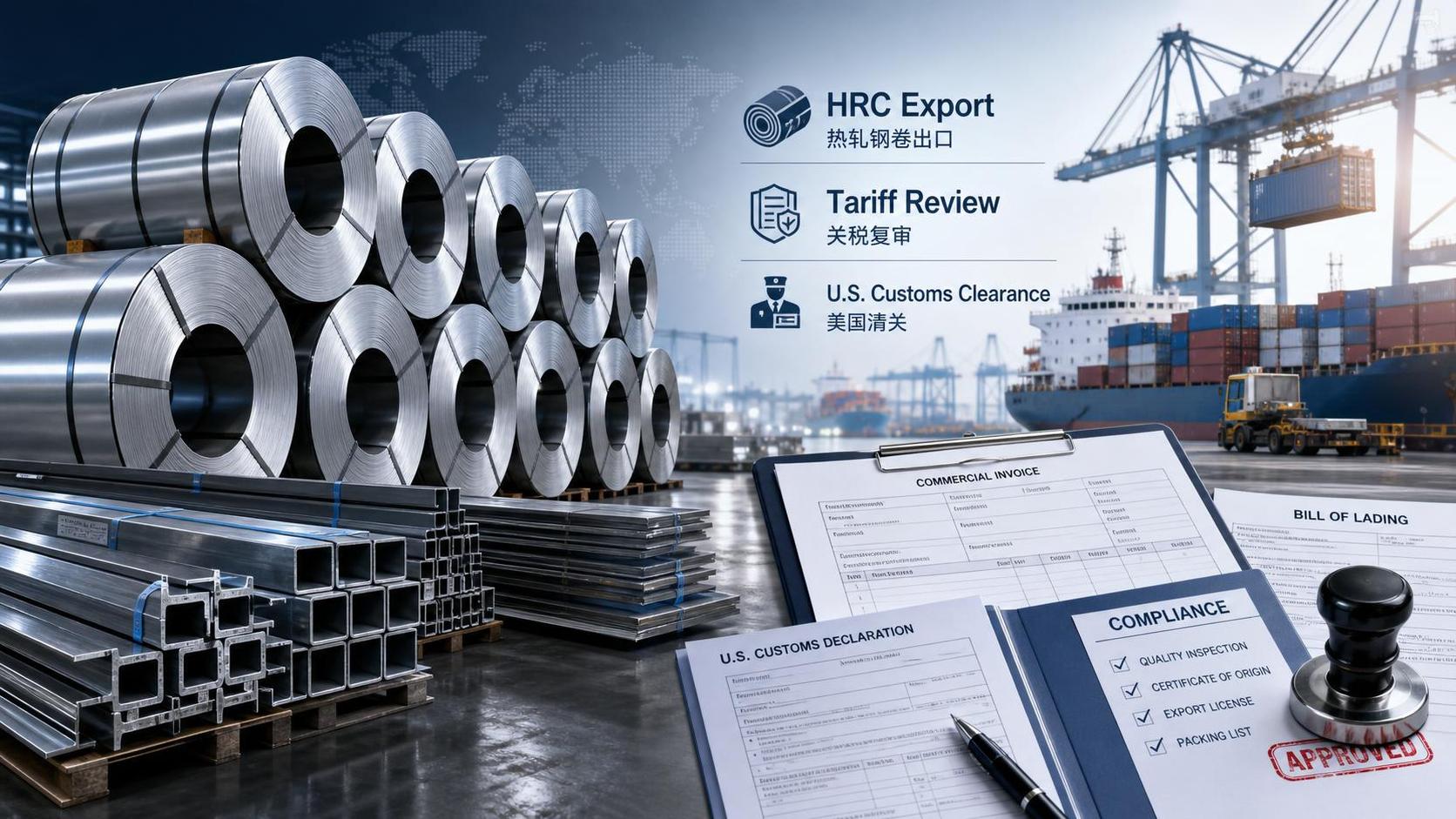
On August 2, 2026, the U.S. Department of Commerce announced the launch of a first expedited Sunset Review of the antidumping duty order covering hot-rolled steel coil from China under HS 7208.10–7208.90. For exporters, U.S.-registered importers, distributors, and downstream buyers handling this product line, the development matters because it is tied to future tariff applicability over the next five years and to the compliance path used for customs clearance. The requirement for interested parties to file statements by August 30 also turns this from a distant policy headline into an immediate operational issue for companies already trading or planning shipments.

What Has Been Confirmed So Far
The confirmed facts are limited but commercially significant. The review was announced on August 2, 2026, following an application from the domestic industry. It concerns hot-rolled steel coil originating in China and classified under HS 7208.10–7208.90. The proceeding is described as the first expedited Sunset Review of the existing antidumping duty order. According to the event summary, the outcome will directly affect tariff applicability and the customs compliance route for exports of the covered product to the United States over the next five years. The matter also extends to all U.S.-registered importers and distributors involved, which are required to submit statements of interest by August 30.
Where the Immediate Pressure May Appear
Export-facing steel suppliers and trading firms
From an industry perspective, companies shipping the covered product to the U.S. may be affected first because the review is linked to the future treatment of antidumping duties. The main exposure lies in export planning, customer commitments, shipment timing, and document consistency tied to the covered HS range. What deserves closer attention is whether internal product classification, contract language, and shipment files are fully aligned with the scope of the goods being reviewed.
U.S. importers and distribution channels
U.S.-registered importers and distributors are explicitly named in the event summary, so their compliance workload is more immediate. The practical issue is not only tariff risk over time, but also whether required statements of interest are prepared and submitted by the stated deadline. Observably, this makes the review relevant to customs handling, importer recordkeeping, and distributor-side compliance review rather than only to upstream mills or exporters.
Procurement and downstream manufacturing functions
Companies buying hot-rolled steel coil for production or resale may not be the direct subject of the filing requirement, but they can still be affected through pricing assumptions, supplier selection, and delivery planning. Analysis shows that procurement teams should pay attention to origin-related exposure, covered product categories, and whether supply commitments into the U.S. market rely on trade conditions that could remain under review. For downstream users, the key issue is continuity of compliant supply rather than any confirmed change in product standards or technical specifications.
Logistics and trade compliance service providers
Customs brokers, trade advisors, and supply chain service providers may see increased demand for classification checks, file review, and shipment-by-shipment compliance support. It is more appropriate to understand this as a procedural pressure point: when a review directly affects tariff applicability and customs clearance pathways, service providers often become central to document control and deadline management, even before any final outcome is known.
What Companies Should Watch Closely Now
Check whether products and paperwork fall within scope
Companies dealing in hot-rolled steel coil should confirm whether their goods fall within HS 7208.10–7208.90 as referenced in the event summary. The immediate compliance value is in reducing mismatch between product description, customs classification, commercial invoices, and shipment documentation. This is especially relevant for parties serving the U.S. market.
Track filing obligations and internal responsibility
Because the summary states that all U.S.-registered importers and distributors involved must submit statements of interest by August 30, affected businesses should identify who is responsible for filing, review the completeness of supporting records, and avoid treating the deadline as a secondary legal formality. The input does not provide further procedural detail, so any next step beyond this deadline should still be verified against official notices.
Reassess delivery and procurement assumptions
Analysis shows that companies should review near-term delivery commitments, purchase schedules, and U.S.-bound sales assumptions tied to the covered product. The reason is not that a final trade outcome has already been determined, but that the review itself introduces a compliance variable into future shipment planning and cost evaluation.
Watch for changes in official wording and execution practice
The current input confirms the opening of the review and the interest statement deadline, but it does not provide detailed implementation guidance, later-stage procedural steps, or any final decision. For that reason, companies should monitor later official wording, customs execution practice, and any market-side adjustments in documentation requests or contract terms before treating this as a settled operating framework.
How This Development Is Best Understood
Analysis shows that this announcement is best read as an active enforcement and review signal rather than a completed policy outcome. The review has already begun, and the filing deadline gives it immediate operational relevance. At the same time, the input does not establish the final result of the proceeding, so the market should avoid assuming a confirmed long-term tariff direction from the opening notice alone. What deserves closer attention is the way companies respond in compliance practice: classification discipline, importer readiness, and document control may matter before any broader commercial adjustment becomes visible.
A Practical Reading of the Current Stage
At this stage, the event is more appropriately understood as a live trade-rule development with direct compliance implications, not merely as a background policy update and not yet as a finalized market outcome. For the steel trade and related supply chain participants, the immediate significance lies in procedural readiness, deadline awareness, and careful handling of U.S.-bound transactions involving the covered HS codes. Broader commercial effects may follow, but they still require observation rather than assumption.
Basis of This Article and What Still Needs Verification
This article is based on the user-provided news title, event date, and event summary. For this type of development, relevant source categories typically include official announcements, releases from regulatory authorities, customs or trade administration information, industry association updates, standards-related publications, and reporting by established sector media. No specific official source link was provided in the input, so the precise official publication path still needs to be verified. Observably, the points that warrant continued follow-up include any later procedural detail, the wording used in subsequent official notices, practical customs implementation, changes in transaction documents or tender requirements, industry feedback, and how affected companies execute their compliance response.
By clicking 'Allow All', you agree to the storage of cookies on your device to enhance site navigation, analyze site usage and assist with our marketing efforts. Coo Cookie Notice