



On August 1, 2026, the European Commission moved the steel-focused CBAM transition into a mandatory reporting stage. For Chinese exporters shipping steel and structural steel products to the EU, including H-beam, I-beam, and angle steel, the change puts carbon data disclosure and verification directly into routine trade execution. The development deserves close attention from exporters, procurement teams, manufacturers, logistics coordinators, and customs-facing service providers because it is tied not only to compliance cost, but also to clearance timing and the risk of cargo being held or refused entry.
What the New Requirement Confirms
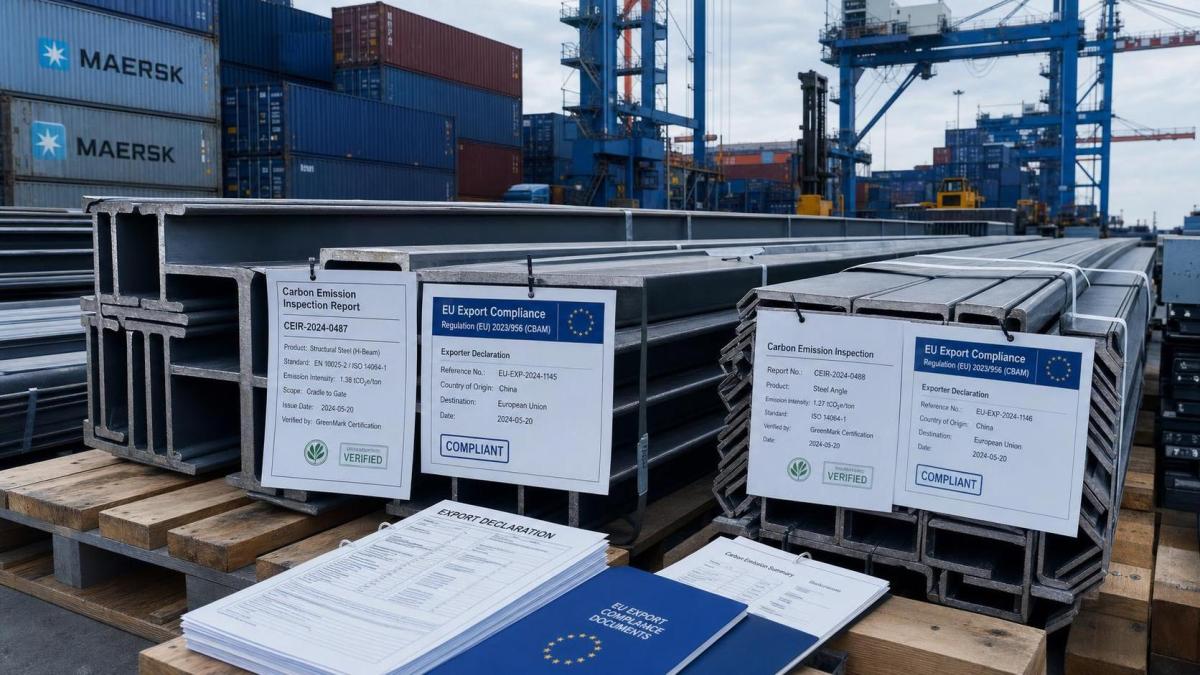
According to the information provided, from August 1, 2026, EU CBAM enters a compulsory data reporting phase for steel-related exports covered by this update. Chinese exporters sending steel and section products to the EU are required to submit embedded carbon emissions data on a quarterly basis. The reported data must also undergo third-party verification. The summary further states that the rule will directly affect procurement-related compliance costs and customs clearance efficiency, and that failure to report on time may result in cargo delays at port or refusal of entry.
Where the Operational Pressure May Appear First
Export execution is now tied more closely to emissions reporting
From an industry perspective, direct trading companies are likely to feel the change most immediately because they sit at the point where shipment scheduling, customs documents, and customer delivery commitments come together. Their exposure is not limited to filing work itself; it also includes the risk that incomplete or late reporting disrupts dispatch plans and border entry.
Procurement and sourcing teams will face a new documentation burden
Analysis shows that procurement functions may be affected because quarterly embedded carbon reporting depends on upstream data collection. For companies exporting covered steel products, supplier-side documentation, data consistency, and timing of internal collection may become a practical issue, especially where purchasing and export compliance are handled by separate teams.
Processing and manufacturing links may see added coordination demands
For processors and manufacturers involved in producing steel sections for EU-bound orders, the main issue is likely to be coordination around emissions-related information and third-party verification readiness. What deserves closer attention is that production, documentation, and export delivery may no longer operate as loosely connected steps when the reporting deadline has direct customs implications.
Logistics and customs-facing service providers may need tighter lead-time planning
Supply chain service providers, including parties involved in shipment arrangement and customs coordination, may be affected because reporting compliance can influence whether goods move through clearance on time. Observably, this raises the importance of document completeness and communication checkpoints before cargo reaches the border.
What Companies Should Watch in Day-to-Day Practice
Quarterly reporting should be treated as a shipment-linked task
Companies dealing in covered steel exports should pay close attention to how quarterly carbon data reporting is aligned with their order cycle and shipping rhythm. In practical terms, the issue is not only whether data exists, but whether it is ready in the format and timeframe needed for trade execution.
Third-party verification is a separate compliance step
The requirement for third-party verification means businesses should distinguish between internal data preparation and externally validated reporting. Analysis shows that this distinction matters operationally because a document set that appears complete internally may still fall short if verification has not been arranged in time.
Product scope and customer communication deserve early review
For exporters of H-beam, I-beam, angle steel, and related steel sections, current attention should remain on confirming which shipments fall within this reporting expectation and how delivery discussions with EU customers are handled. Where reporting timing affects customs progress, communication around lead times and documentation status becomes part of contract performance management.
Contingency planning matters where port delay risk exists
Because the provided summary states that missed reporting can lead to cargo being held or denied entry, companies should pay attention to internal escalation procedures, document checkpoints, and responsibility allocation across sales, compliance, procurement, and logistics teams. This is less about broad management theory and more about preventing avoidable disruption in shipment execution.
Why This Looks Like More Than a Short-Term Filing Change
Observably, this update is not just an administrative reminder. It signals that carbon-related reporting for covered steel exports has become an operational condition of access in day-to-day EU trade. At the same time, it is more appropriate to understand this as a confirmed compliance development rather than as a complete picture of all future market effects. The immediate fact is the reporting obligation and verification requirement; the broader commercial impact still needs to be watched through actual execution, clearance performance, and how companies adapt their internal workflows.
How the Market May Read This Update Now
At this stage, the development is best understood as a concrete near-term compliance shift with longer-term implications for trade process discipline. It does not by itself prove a final market outcome for all steel trade flows, but it clearly raises the importance of emissions data readiness, cross-team coordination, and customs-linked reporting accuracy for companies serving EU customers.
About the Basis of This Article
This article is based on the user-provided news title, event date, and event summary concerning the European Commission's implementation of CBAM transition-period reporting obligations for steel exports, dated August 1, 2026. For developments of this type, relevant source categories typically include official announcements, corporate disclosures, industry association updates, authoritative media reporting, and standards-related documents. A specific official source link was not provided in the input, so the exact reference still requires ongoing verification. Further monitoring should focus on any updated official wording, scope clarification, and practical enforcement details affecting reporting, verification, and customs handling.
By clicking 'Allow All', you agree to the storage of cookies on your device to enhance site navigation, analyze site usage and assist with our marketing efforts. Coo Cookie Notice