


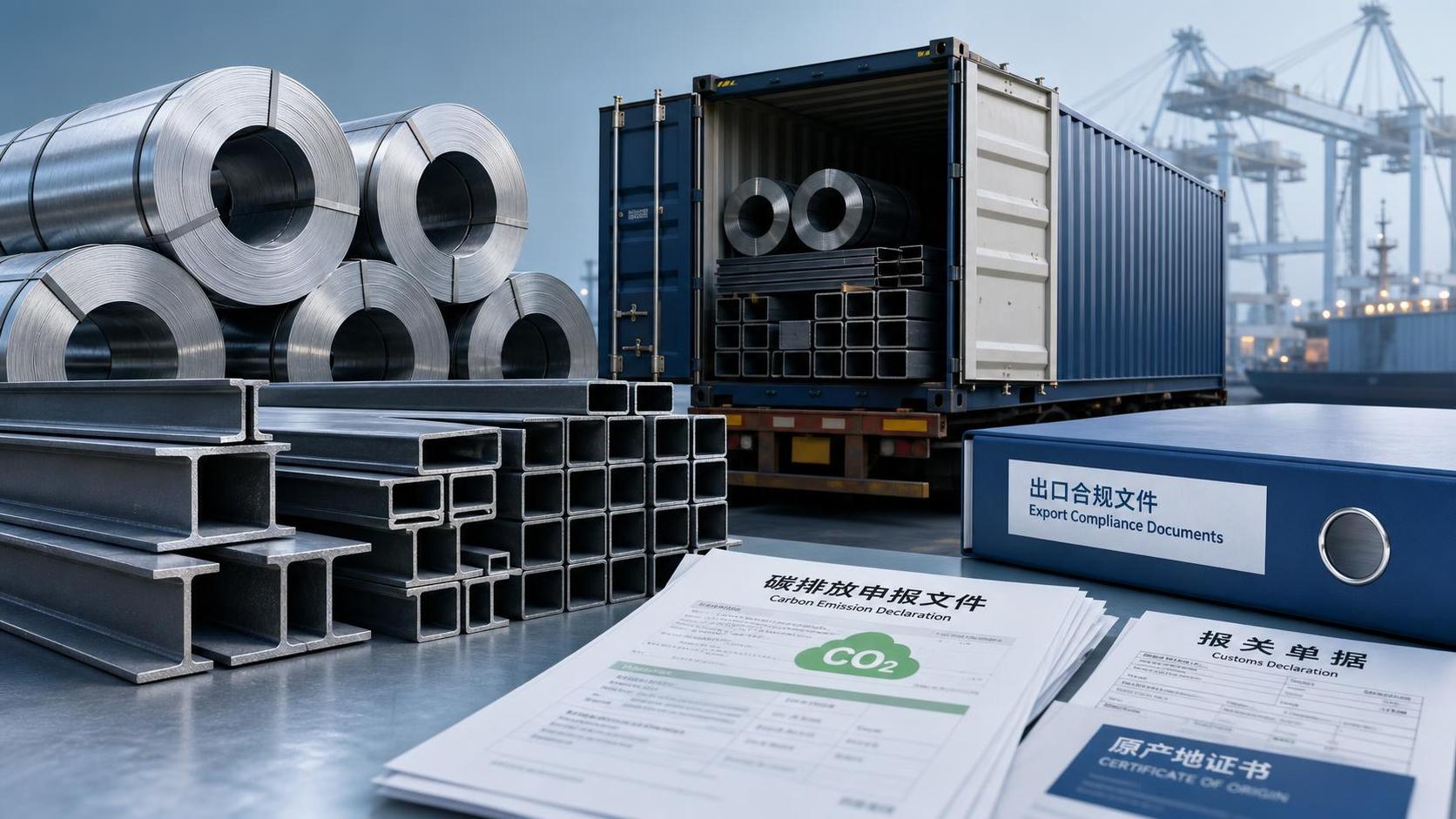
On August 1, 2026, the European Commission moved steel-related CBAM compliance into a mandatory reporting stage for exporters shipping steel products and sections into the EU. For companies dealing in products such as hot-rolled coil, H-beams, and square or rectangular tubes, the immediate issue is no longer general policy awareness but quarterly submission of embedded carbon emissions data through the EU CBAM portal. This is worth close industry attention because the requirement reaches beyond customs paperwork and into exporter compliance readiness, third-party verification coordination, and the document flow expected by downstream buyers.
What Has Formally Taken Effect
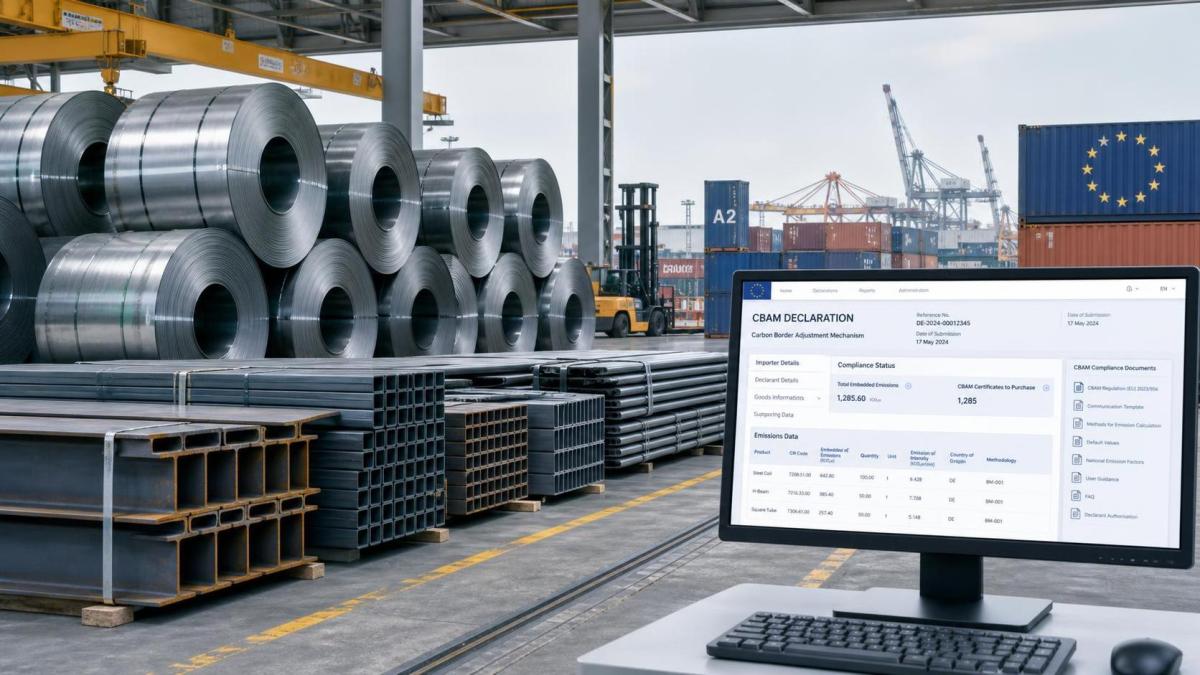
According to the information provided, from August 1, 2026, CBAM entered a compulsory data reporting phase for steel and section products exported to the EU. Exporters are required to submit quarterly data on embedded carbon emissions through the EU CBAM portal.
The scope described includes steel products and sections such as hot-rolled coil, H-beams, and square or rectangular tubes. The information also states that non-compliant reporting may lead to customs clearance delays and potential rejection risks.
The requirement directly affects compliance preparation by Chinese steel exporters, coordination with third-party verification partners, and the delivery of procurement-related documentation to downstream buyers.
Where the Pressure Appears Along the Trade Chain
Exporters face a stricter filing responsibility
From an industry perspective, direct exporters are the first group affected because the reporting obligation is tied to shipments entering the EU market. The operational impact is likely to appear in quarterly data preparation, internal compliance review, and submission timing through the CBAM portal. What deserves closer attention is whether exporters can organize emissions-related information in a form that supports timely filing and avoids disruption at customs.
Verification and compliance service partners move closer to the transaction flow
Analysis shows that third-party verification cooperation becomes more closely linked to shipment execution once reporting is mandatory. The effect is not limited to advisory work; it may also influence the pace at which exporters gather, check, and finalize emissions-related information before submission. For service providers, the practical issue is whether their verification support can match exporters' quarterly reporting cycles.
Downstream buyers may tighten document expectations
Observably, EU-side buyers and procurement teams may feel the impact through documentation handover and order execution. The information provided already points to procurement document delivery as a directly affected process. In practice, this means buyers are likely to pay closer attention to whether exporters can provide the required CBAM-related information in step with purchasing and delivery schedules.
Supply chain coordination becomes a timing issue
For companies involved in processing, distribution, or supply chain support around EU-bound steel products, the immediate pressure may come from coordination rather than from regulation text alone. If reporting is incomplete or late, the stated risks of customs delay and potential refusal can affect delivery timing, handover planning, and communication between trading parties.
What Companies Should Watch Now
Quarterly reporting readiness needs to be operational, not only procedural
The key practical question is whether companies exporting covered steel products already have a workable quarterly reporting process for embedded carbon emissions data. It is more appropriate to understand this as an execution issue: knowing the rule is different from being able to submit complete information through the EU CBAM portal on schedule.
Product-level exposure should be reviewed carefully
What deserves closer attention is the exposure of specific steel categories mentioned in the provided information, including hot-rolled coil, H-beams, and square or rectangular tubes. Companies with recurring EU shipments in these lines should pay particular attention to whether internal product documentation and transaction files are aligned with reporting needs.
Verification cooperation may affect delivery rhythm
Analysis shows that cooperation with third-party verification partners should be treated as part of the delivery process rather than as a separate compliance exercise. If data review or confirmation is not synchronized with shipment schedules, the resulting friction may show up in customs handling and buyer communication.
Customer communication and document transfer should be tightened
The information provided highlights downstream procurement document delivery as a directly affected area. That makes customer-facing coordination an immediate priority. Exporters and traders should closely monitor what information buyers expect, when they expect it, and how CBAM-related documentation fits into existing order and delivery workflows.
Why This Looks Like a Practical Transition Point
As an editorial observation, this development is better understood as a concrete compliance transition rather than a distant policy signal. The reason is straightforward: the reporting stage described here is already mandatory from a specified date, and the stated consequences involve customs clearance and potential rejection risk rather than abstract regulatory discussion.
At the same time, it would be premature to treat every business effect as fully settled. Observably, the most important near-term question is how consistently reporting obligations, verification support, and buyer document requirements align in day-to-day transactions. That is why this remains a live industry development that warrants continued monitoring.
How the Market May Need to Read This Change
In summary, the August 1, 2026 shift in EU CBAM reporting for steel exports should be read as an immediate compliance development with direct trade execution consequences. The confirmed facts point to mandatory quarterly embedded carbon emissions reporting, exposure for covered steel products, and tangible non-compliance risks at the customs and acceptance stages.
From a neutral industry standpoint, it is more appropriate to understand this as both a short-term operational change and a longer-term compliance signal. In the short term, the issue is filing readiness and document coordination. Over a longer horizon, the development suggests that carbon-related reporting is becoming more tightly connected to normal export delivery processes for steel suppliers serving the EU market.
Basis of This Article and What Still Needs Verification
This article is based on the user-provided news title, event date, and event summary. It has been written from that supplied information only and does not introduce unverified figures, company names, policy references, or source links beyond the provided brief.
For this type of development, source categories commonly relevant include official announcements, corporate disclosures, industry association updates, authoritative media coverage, and standard-setting or compliance-related documents. A specific official source link was not provided in the input, so continued verification remains necessary.
Further observation should focus on any subsequent official wording, implementation clarifications, and practical documentation expectations affecting exporters, verification partners, and downstream buyers.
By clicking 'Allow All', you agree to the storage of cookies on your device to enhance site navigation, analyze site usage and assist with our marketing efforts. Coo Cookie Notice