



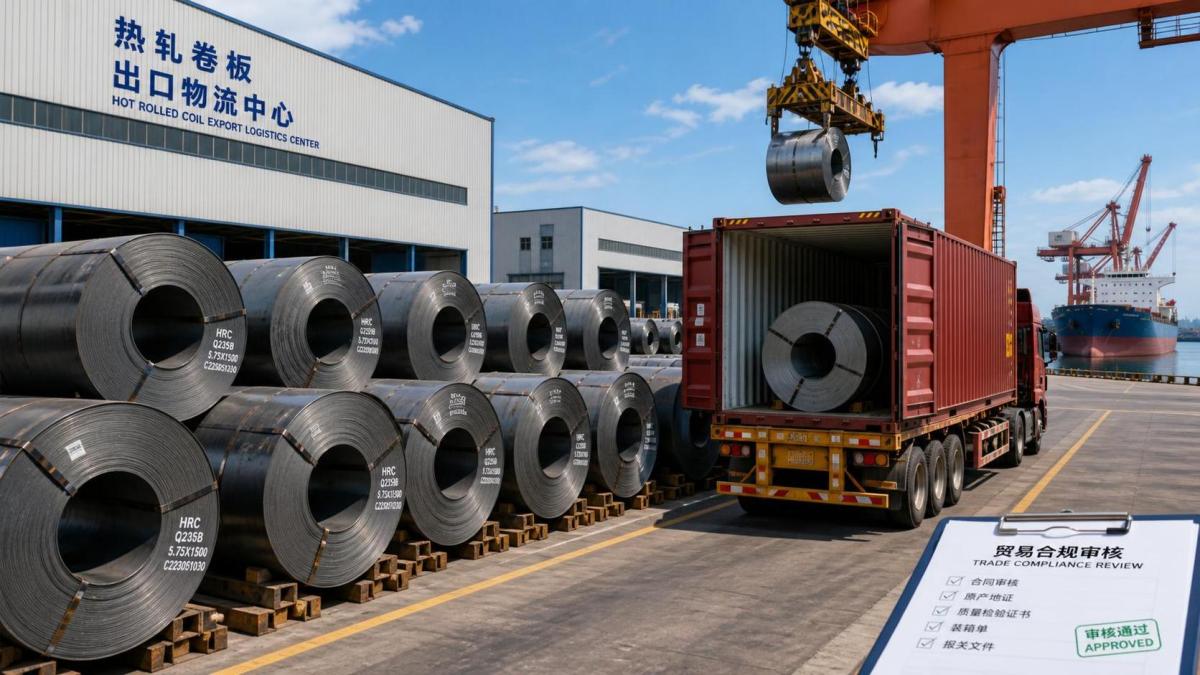
On August 6, 2026, the U.S. Department of Commerce announced an anti-dumping administrative review covering hot-rolled coils from China shipped during the 2025 calendar year. The move matters beyond a procedural notice: it bears directly on customs clearance, cash deposit arrangements, and the eventual application of duty orders in the U.S. market. For Chinese exporters with valid A/B rate eligibility, as well as overseas distributors and buyers tied to these shipments, the immediate issue is not only trade exposure but also how documentation, supplier qualification, payment terms, and delivery execution may now be handled in practice.
What the Notice Confirms
The confirmed facts are limited but commercially significant. The U.S. Department of Commerce formally initiated an anti-dumping administrative review on August 6, 2026, for hot-rolled coils originating in China. The review covers export shipments made from January 1, 2025 through December 31, 2025. According to the provided event summary, the review will directly affect U.S. import customs clearance, the payment of deposits, and the final enforcement of duty orders. It also applies to Chinese exporters that hold valid A/B rate eligibility. In parallel, overseas distributors and purchasers are being prompted to verify supplier qualifications, adjust payment terms, and prepare supplementary origin and cost documentation.
Where the Commercial Pressure Is Likely to Appear First
Exporters now face a tighter documentation burden
From an industry perspective, Chinese exporters covered by valid A/B rate status are likely to feel the first impact through compliance preparation rather than through an immediate operational halt. The practical pressure point is whether shipment records, origin support, and cost-related materials can withstand closer review. What deserves closer attention is that administrative review processes often make document consistency a commercial issue, because eligibility status and the later handling of duty orders can affect how counterparties assess transaction risk.
U.S. import-side execution may become more cautious
For importers and downstream buyers in the U.S. market, the immediate business effect described in the event summary lies in customs clearance, deposit obligations, and final duty execution. Analysis shows that this can translate into more cautious transaction handling at the operational level, especially where entry timing, document completeness, and supplier declarations need to align closely. Even without additional facts on implementation details, the notice clearly signals that import-side procedures may require more disciplined file management and closer supplier coordination.
Distributors and procurement teams must reassess counterparties
Overseas distributors and procurement teams are explicitly identified in the event summary as parties that should act immediately. Their exposure is less about the legal review itself and more about contract performance and supply continuity. Observably, supplier qualification checks, payment term adjustments, and requests for added origin or cost documents can affect purchasing cycles, internal approvals, and shipment release planning. For channel participants, this is a reminder that trade-rule changes often move through paperwork and commercial terms before they show up in visible market pricing or delivery schedules.
Supply-chain service providers may need cleaner trade files
Logistics coordinators, customs-facing service providers, and related supply-chain teams may also be drawn in where shipment files require supplementation. Analysis shows that the operational risk here is procedural mismatch: if trade documents, origin support, and cost-related records are not aligned across exporter, buyer, and service provider, downstream clearance or payment handling can become more difficult. The event summary does not provide execution details, so this remains a risk observation rather than a confirmed outcome.
What Companies Should Be Checking Now
Verify rate eligibility and supplier status without delay
The most immediate task is to confirm whether the exporting entity involved in U.S.-bound hot-rolled coil shipments falls within the group described as holding valid A/B rate eligibility. For buyers and distributors, this is a practical screening issue, because supplier status can shape how transactions are reviewed internally and how supporting files are requested.
Review payment clauses against trade-rule exposure
The event summary specifically points to payment term adjustments. It is more appropriate to understand this as a current risk-control step rather than a final market outcome. Companies involved in affected shipments should examine whether existing payment arrangements adequately reflect possible delays linked to customs handling, deposit obligations, or further document requests.
Prepare origin and cost records for closer scrutiny
Another immediate priority is document readiness. The provided facts indicate that overseas buyers and distributors should prepare supplementary origin and cost materials. Analysis shows that companies should focus on completeness, internal consistency, and retrievability of these files, especially where multiple parties handle sourcing, contracting, shipment booking, and import formalities.
Watch for later wording and execution signals
The current notice establishes the review, but it does not, based on the provided input, resolve all downstream execution questions. What deserves closer attention is any later official wording, procedural clarification, or transaction-level practice that may influence how import entries, supporting materials, or final duty execution are handled. At this stage, companies should treat the development as an active compliance matter that still requires follow-through.
Why This Looks More Like an Execution Signal Than a Closed Outcome
Analysis shows that this development is best read as an enforcement-stage trade signal rather than as a completed result. The review has been initiated, the covered period is defined, and the areas of direct impact have been identified. However, the provided information does not establish final findings, final liability outcomes, or a complete operational rulebook for every affected transaction. Observably, that distinction matters: companies should respond to the procedural reality now, while avoiding assumptions about final commercial consequences that have not yet been confirmed.
How the Market Should Read This Development
At this point, the industry significance lies in process discipline. The notice indicates that trade compliance, supplier qualification, document control, and payment structuring are no longer background issues for affected hot-rolled coil transactions tied to the U.S. market. It is more appropriate to understand this development as a live rule-execution event with immediate operational relevance, while the fuller commercial impact still requires continued observation.
Basis of This Article and What Still Needs Verification
This article is based on the user-provided news title, event date, and event summary. For developments of this type, relevant source categories usually include official government notices, releases from regulatory authorities, customs or trade-administration information, industry association updates, standard-setting documents, and reporting by established professional media. No specific official source link was provided in the input, so the underlying notice and any later clarifications still need ongoing verification. Further observation should focus on subsequent official language, execution interpretations, documentation expectations, market feedback, and how affected companies implement compliance and transaction adjustments in practice.
By clicking 'Allow All', you agree to the storage of cookies on your device to enhance site navigation, analyze site usage and assist with our marketing efforts. Coo Cookie Notice