


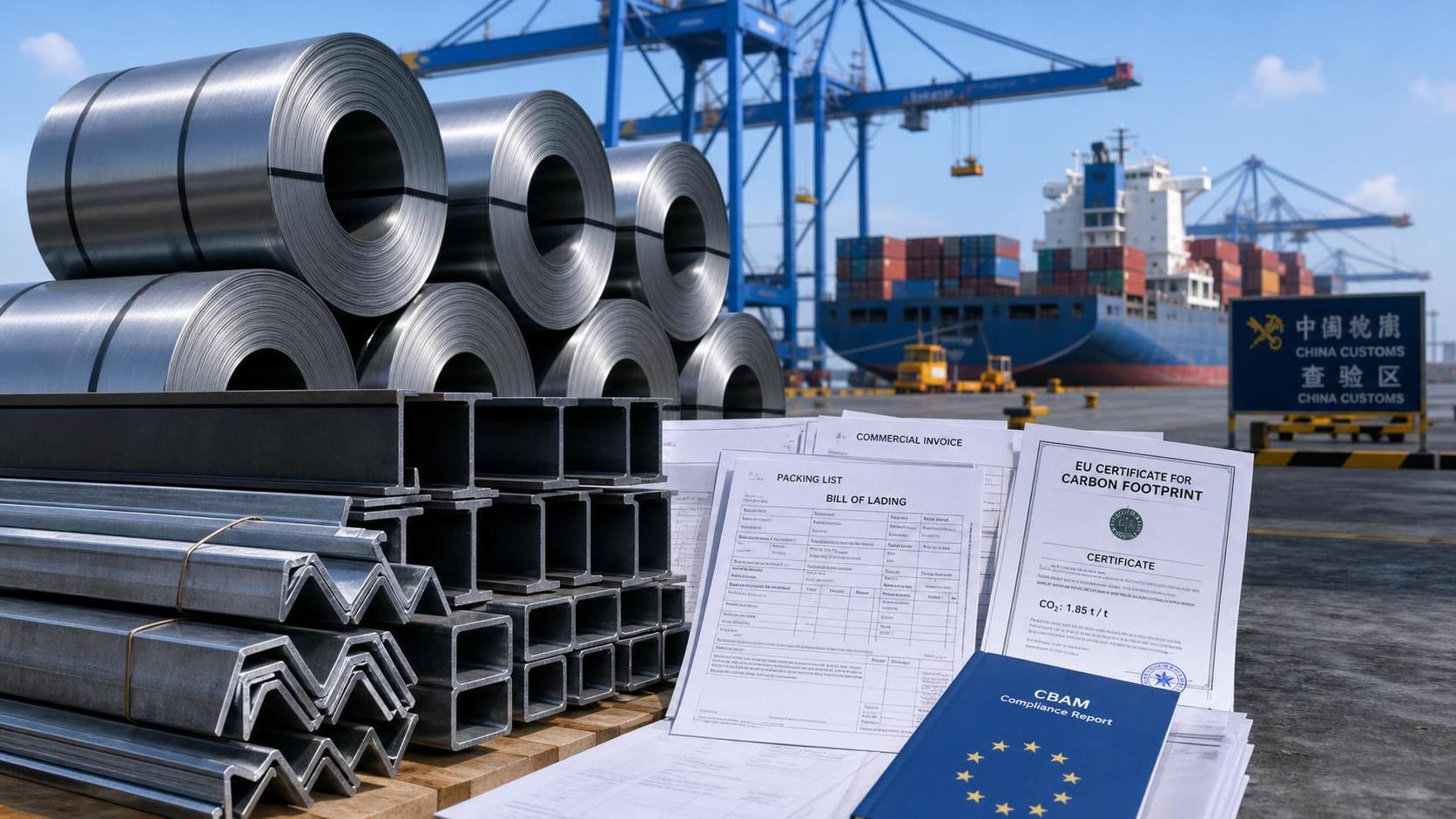
On August 5, 2026, the European Commission issued updated operational guidance for the CBAM transitional period, setting a new compliance expectation for steel and structural steel products exported to the EU. From October 2026, import declarations for products such as hot-rolled coils, H-beams, and cold-formed sections will need to include embedded carbon emissions data verified by an accredited third party. For exporters, importers, customs-facing teams, and supply chain service providers, the immediate concern is that carbon data is moving closer to the actual clearance process, with direct implications for documentation readiness, lead times, and compliance cost.
What the Updated Guidance Confirms
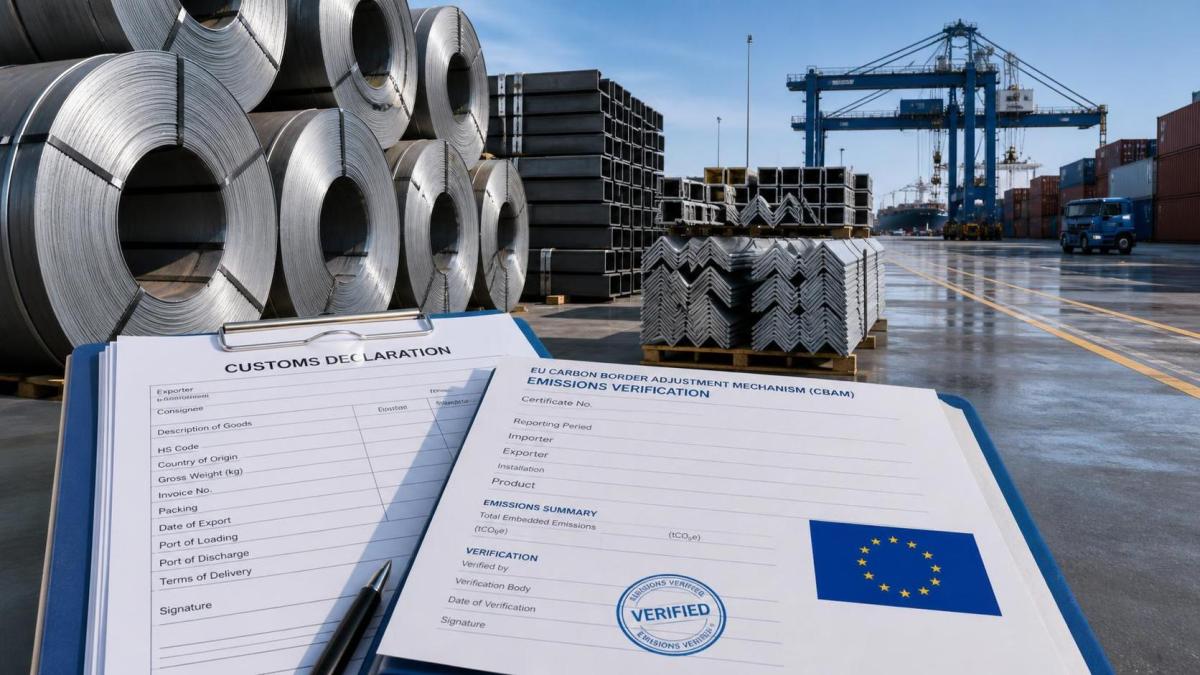
The confirmed change is tied to the European Commission's formal release of updated CBAM transitional guidance on August 5, 2026. According to the information provided, starting in October 2026, all steel and section products exported to the EU must be accompanied at the import declaration stage by embedded carbon emissions data that has been verified by a recognized third party.
The products explicitly referenced include hot-rolled coil, H-beam, and cold-formed sections. The stated direct impact is on customs clearance timing and compliance costs for Chinese exporters. Where the requirement is not met, companies may face delayed release of goods or additional checks.
Where the Operational Pressure Is Likely to Appear
Export-facing steel suppliers will feel the documentation burden first
From an industry perspective, companies shipping steel and profile products to the EU are the first group likely to be affected because the new requirement is linked to import declaration. The pressure point is not only product eligibility but whether verified embedded carbon data can be prepared in a form accepted during customs-related processing. What deserves closer attention is the risk that shipment planning and document preparation may need tighter coordination than before.
Manufacturers and processors may face tighter upstream data requests
Analysis shows that processors and manufacturers supplying export orders may also be affected, especially where their products fall within the referenced steel and section categories. The practical issue is that third-party-verified emissions information cannot be treated as a last-minute trade document if the underlying product data is incomplete or inconsistent. The impact may therefore appear in production records, internal handover processes, and exporter-manufacturer communication.
Customs and logistics service providers may need to adjust filing workflows
Supply chain service providers, including customs brokers and logistics coordinators, are also likely to see operational changes. Their exposure comes from the link between import declaration and verified emissions data submission. In practice, the main areas to watch are document completeness checks, declaration timing, and contingency handling when supporting materials are missing or questioned.
EU-side buyers may pay more attention to delivery certainty
Observably, buyers and import-side partners connected to EU deliveries may focus more closely on whether suppliers can provide compliant emissions documentation on schedule. The business impact is less about product demand in the information provided and more about execution reliability, including whether orders can clear without delay or additional review.
What Companies Should Watch Now
Whether October readiness is reflected in current order execution
What deserves closer attention is the gap between a published rule and day-to-day shipment execution. Companies involved in steel exports to the EU should closely track whether orders shipping around or after October 2026 will require adjusted document collection timelines, especially where customs clearance speed matters.
The scope of products covered in actual transactions
Businesses should review whether their export mix includes the steel and section products referenced in the update, including hot-rolled coil, H-beam, and cold-formed sections. This is a practical screening issue: the closer a product sits to the named categories, the more important it becomes to confirm internal document readiness and counterpart expectations.
Third-party verification capacity and document coordination
Analysis shows that the requirement is not only about having emissions data, but about having emissions data verified by an accredited third party at the point it is needed for import filing. Companies should therefore pay attention to verification arrangements, document lead times, and the handoff between suppliers, exporters, and customs-facing teams.
Customer communication and contingency planning
Where delivery windows are tight, exporters and service providers may need clearer communication with EU customers and import partners on documentation status. It is more appropriate to understand this as an execution-management issue: if supporting materials are incomplete, the stated risk is delayed release or extra checks, which can affect fulfillment timing even before broader commercial effects are visible.
Why This Looks Like More Than a Routine Filing Update
As an editorial observation, this development is better understood as a near-term operational tightening with longer-term signaling value. The confirmed facts do not establish the full downstream commercial outcome, and they do not by themselves prove how widely costs or delays will spread across all suppliers. However, they do show that embedded carbon reporting for covered steel products is becoming more directly tied to import processing rather than remaining a more distant compliance exercise.
Observably, the market should continue watching how this guidance is applied in actual shipments after October 2026. The most relevant question at this stage is not broad market forecasting, but whether exporters and their partners can convert policy wording into a workable documentation process.
How This Update Is Best Understood at This Stage
At present, this update is best read as a concrete compliance change with immediate operational relevance for steel exports to the EU, especially for parties exposed to customs timing and document accuracy. It is not yet a complete picture of all downstream effects, but it is already specific enough to matter for shipment preparation, partner coordination, and clearance risk control. A measured conclusion is that the rule deserves close business attention now, while some of its broader industry consequences still require continued observation.
Basis of This Article and Ongoing Verification
This article is based on the user-provided news title, event date, and event summary concerning the European Commission's updated CBAM transitional filing requirements for steel imports. For this type of development, commonly relevant source categories may include official government or regulatory announcements, company disclosures, industry association updates, authoritative media reporting, and standards-related documents.
No specific official source link was provided in the input, so the exact publication record and any later clarifications still require ongoing verification. Follow-up attention should remain on any additional official wording, implementation details in practice, and whether customs-facing procedures or supporting document expectations are further clarified after the October 2026 start point.
By clicking 'Allow All', you agree to the storage of cookies on your device to enhance site navigation, analyze site usage and assist with our marketing efforts. Coo Cookie Notice