


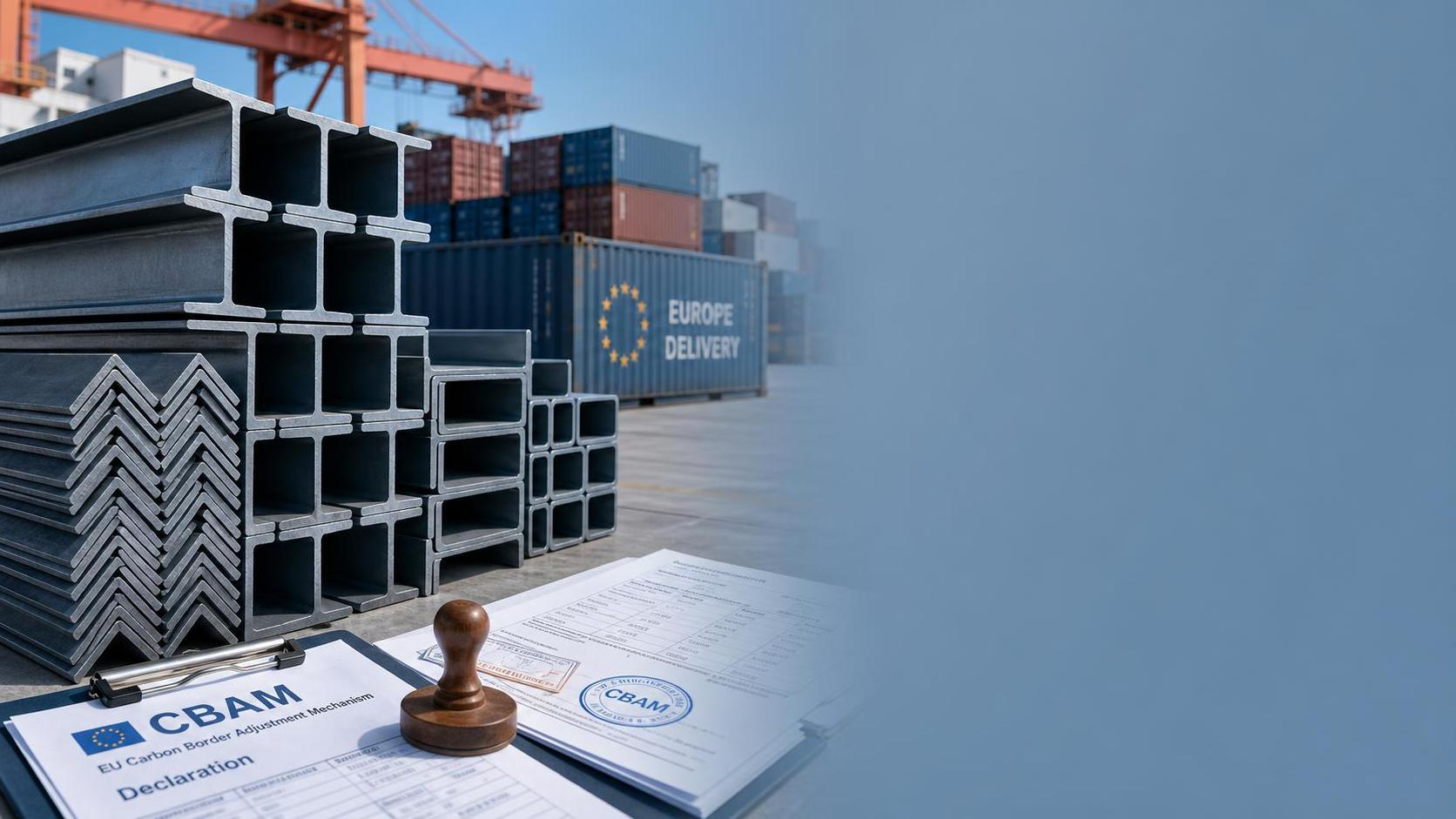
On August 7, 2026, the EU formally brought Phase 3 of CBAM into effect for steel sections, extending the requirement to hot-rolled, cold-formed, and structural steel products including H-beams, angles, and channels. Before customs clearance, importers must submit certified full life-cycle carbon emissions data through the EU CBAM portal. For steel exporters serving the European market, this is not just a compliance update; it directly touches delivery timing, documentation readiness, cost calculation, and coordination with third-party verification partners.
What Has Officially Taken Effect
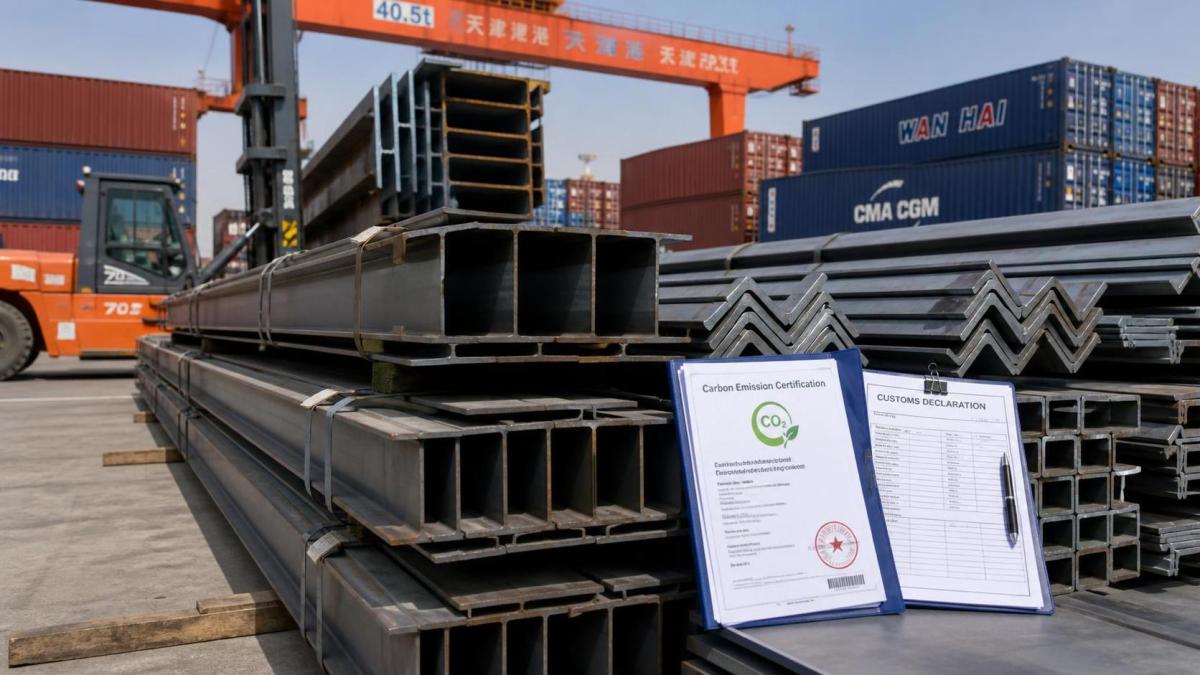
According to the information provided, from August 7, 2026, Phase 3 of the EU CBAM officially covers all hot-rolled, cold-formed, and structural steel sections, including H-beams, angle steel, and channel steel. Importers are required to submit certified full life-cycle carbon emissions data through the EU CBAM portal before customs clearance. If the declaration is not compliant, the goods may be held at port or returned. The requirement directly affects global steel exporters in their delivery process to Europe, cost accounting, and arrangements with third-party verification parties.
Where the Pressure Will Be Felt First
Export deliveries into the EU face a stricter gate
From an industry perspective, direct trading companies and exporters are likely to feel the most immediate impact because customs clearance is now tied to certified carbon data submission. The main pressure point is no longer only product shipment, but whether documentation can match the customs timeline. What deserves closer attention is the risk of disruption when shipment schedules move faster than verification and portal submission work.
Costing work becomes more sensitive for suppliers and sellers
Analysis shows that companies quoting or supplying steel sections into Europe may need to pay closer attention to how carbon-related compliance affects internal cost calculation. The confirmed fact is that the new requirement directly affects cost accounting. In practice, this means commercial teams, compliance staff, and finance-related functions will need better alignment on what must be prepared before cargo reaches the EU border.
Third-party verification becomes part of the delivery chain
Observably, service providers involved in verification and supporting documentation may become more tightly linked to shipment execution. The requirement for certified full life-cycle emissions data means the verification process is no longer peripheral for affected products. The business impact is likely to appear in lead-time planning, responsibility allocation, and document handover between exporters, importers, and external verification partners.
Downstream buyers and procurement teams may watch fulfillment risk more closely
For EU-side buyers and procurement teams, the immediate issue is not only product availability but whether inbound shipments can clear customs without delay. Analysis shows that this may push buyers to ask suppliers earlier about emissions data readiness, supporting documents, and coordination arrangements before shipment rather than after goods are already in transit.
What Companies Should Watch Now
Whether covered product categories are clearly mapped internally
Companies handling hot-rolled, cold-formed, and structural steel sections should pay close attention to whether the relevant product scope has been fully identified in internal sales, export, and customs processes. The practical issue is straightforward: if a shipment falls within the covered categories, the carbon data requirement must be addressed before clearance.
The gap between document preparation and shipment timing
What deserves closer attention is the sequencing of operations. The confirmed rule links compliance submission to pre-clearance, which means documentation cannot be treated as a follow-up task after dispatch. Businesses should closely monitor whether their current delivery cycle allows enough time for certified data preparation and portal submission.
How third-party verification is arranged in real transactions
Analysis shows that the quality of coordination with verification partners may now have a more direct effect on delivery execution. Companies should watch who is responsible for emissions data preparation, who manages certification timing, and how supporting documents move between exporter, importer, and service provider. This is a practical issue of workflow control rather than a general sustainability statement.
How to communicate customs and delivery risk to customers
Because non-compliant declarations may result in cargo being held or returned, customer communication should focus on execution risk. Businesses may need to pay closer attention to contract timing, handover expectations, and shipment readiness discussions with EU customers and import partners, especially where delivery windows are tight.
Why This Looks Like More Than a Short-Term Procedural Update
This section is analysis. It is more appropriate to understand this development as an operational tightening rather than a symbolic policy signal. The requirement is already tied to customs clearance and backed by a clear consequence for non-compliance. At the same time, it should not be overstated into conclusions that were not provided in the source information. The clearest reading at present is that carbon data readiness for covered steel sections has moved into the core execution layer of EU-bound trade.
This section is also observation. The development can be read both as an immediate compliance change and as a longer-term signal that documentation, verification, and trade execution are becoming more closely connected in the steel supply chain. Further interpretation still requires continued observation, especially around how market participants adjust their workflows in response.
How This Update Is Best Understood at Present
At this stage, the industry significance lies in the fact that CBAM Phase 3 for steel sections is no longer an abstract policy topic for affected shipments into the EU. It now has direct consequences for customs handling, delivery continuity, and transaction preparation. A neutral reading is that this is already a concrete operating requirement, while its broader commercial effects still need to be tracked through actual implementation across exporters, importers, and service providers.
Basis of This Article and What Still Needs Verification
This article is based on the user-provided news title, event date, and event summary. For this type of development, relevant source categories would typically include official announcements, company notices, industry association updates, authoritative media reporting, and standards-related documentation. No specific official source link was provided in the input, so the exact official reference still needs ongoing verification. Areas that merit continued attention include any further official wording, implementation clarifications, and practical adjustments in customs, documentation, and third-party verification workflows.
By clicking 'Allow All', you agree to the storage of cookies on your device to enhance site navigation, analyze site usage and assist with our marketing efforts. Coo Cookie Notice