


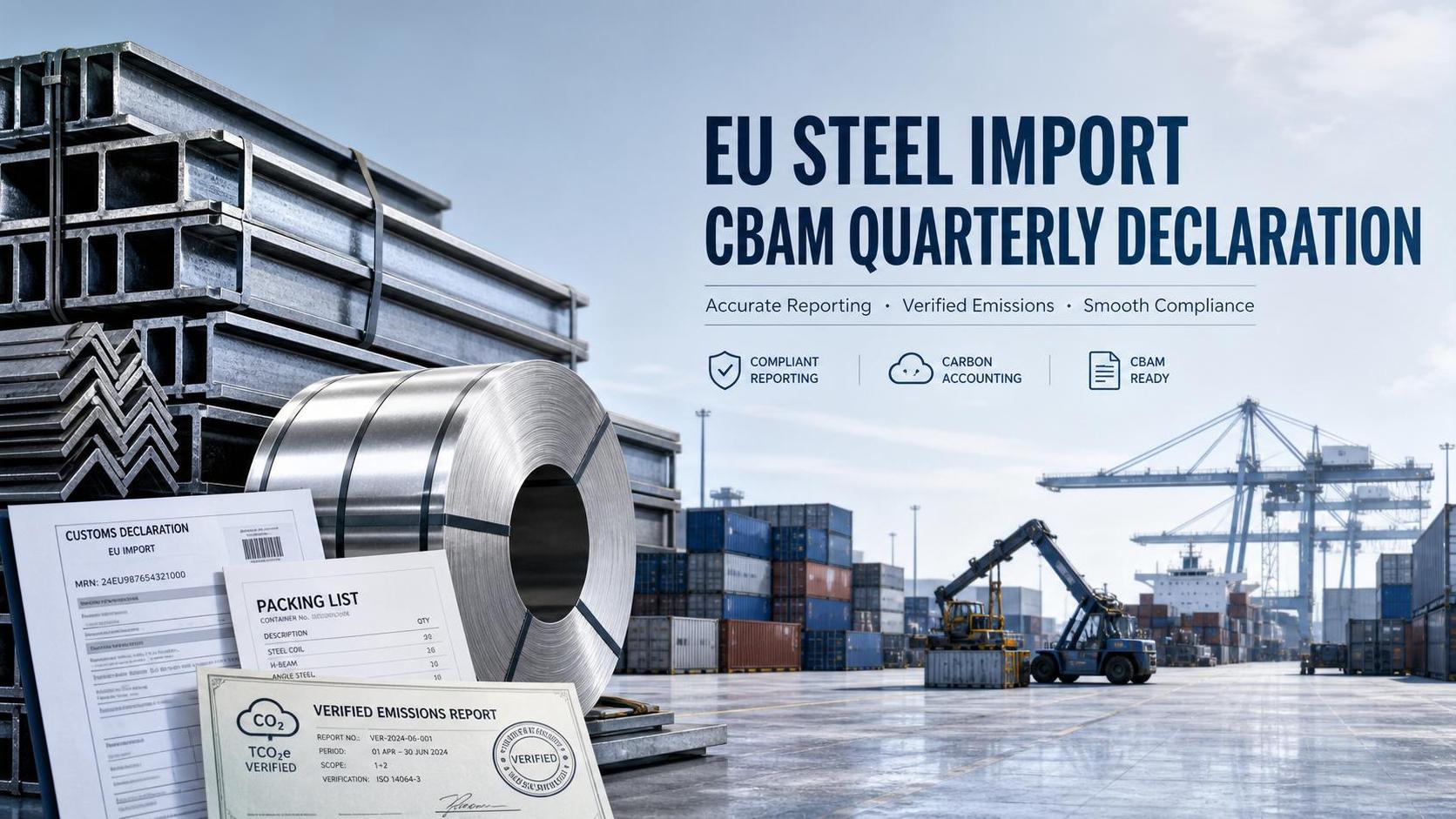
On July 16, 2026, the European Commission put into effect a new third-phase transitional reporting requirement under CBAM for steel and structural steel products entering the EU. For non-EU suppliers exporting products such as H-beams, angle steel, and galvanized coils, the change shifts carbon-related reporting from a general compliance topic into a recurring quarterly filing task tied to customs handling. This matters not only to exporters, but also to buyers, documentation teams, verification partners, and supply chain coordinators whose delivery timing can now be affected by reporting completeness.
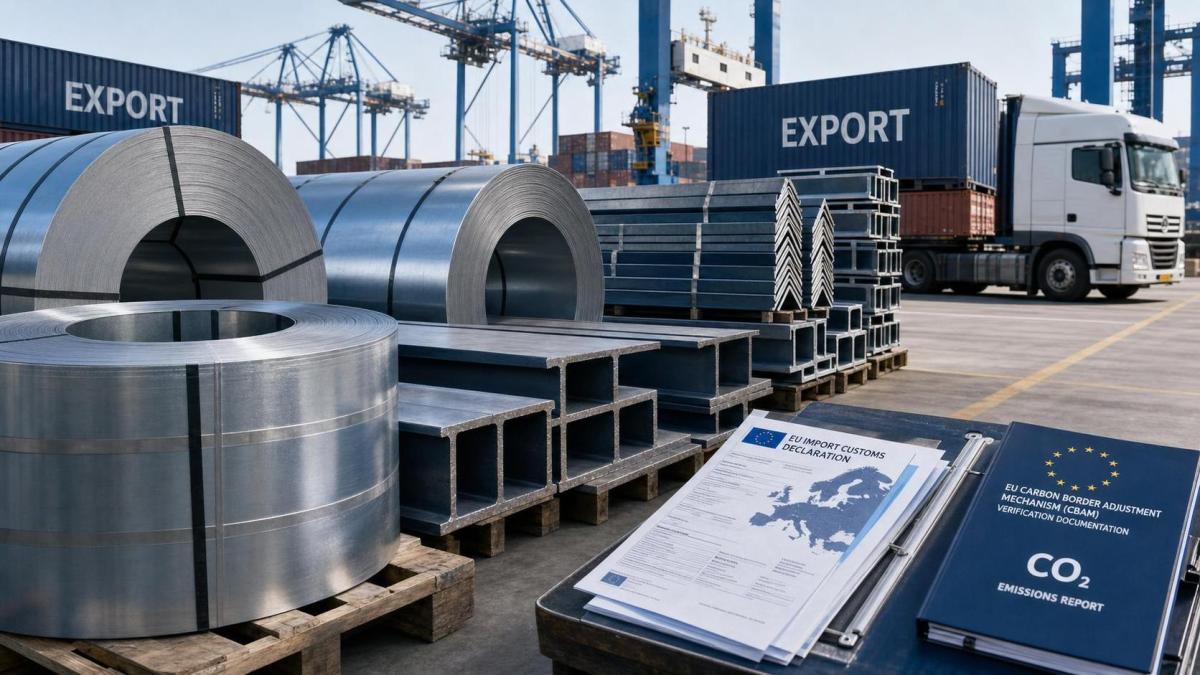
What the New Filing Requirement Confirms
The confirmed change is that, from July 16, 2026, non-EU suppliers exporting steel and related sections to the EU are required to submit quarterly data through the EU CBAM portal during the third phase of the transitional period. The filing must cover embedded carbon emissions in the products as well as proof relating to upstream electricity and coke sources.
The requirement applies to steel and section products including H-beams, angle steel, and galvanized coil products. The information provided also states that failure to complete compliant reporting may affect customs clearance timing and may trigger customs inspection checks and delayed release.
The direct operational impact identified in the event summary falls on Chinese steel exporters, their compliance preparation, cooperation with third-party verification parties, and the document delivery rhythm expected by downstream buyers.
Where the Pressure Will Appear First in the Supply Chain
Export documentation is becoming a customs-facing task
From an industry perspective, exporters are likely to feel the change first because the reporting obligation is tied to quarterly submissions through the EU CBAM portal rather than only to internal recordkeeping. The practical effect is that product shipment support documents, emissions-related declarations, and upstream source evidence now sit closer to the customs process. What deserves closer attention is whether document preparation can keep pace with shipment cycles and buyer delivery schedules.
Procurement teams will need better upstream traceability
For companies sourcing raw materials or coordinating mill-side inputs, the stated need to provide proof of upstream electricity and coke sources points to a higher traceability burden. Analysis shows that procurement functions may need to pay closer attention to whether supplier records can support quarterly reporting, especially where materials pass through multiple production or trading links before export.
Third-party verification cooperation may move earlier in the workflow
The event summary specifically notes the effect on third-party verification cooperation. Observably, this means verification-related coordination may no longer be treated as a final-stage add-on. Instead, manufacturers and exporters may need to align product data collection, source evidence, and review timing earlier in the order and shipment process so that quarterly submissions do not become a bottleneck.
EU buyers may press for earlier file delivery
For downstream buyers and procurement departments, the new requirement can affect document handover timing even when the physical product itself is ready. If non-compliant reporting can lead to customs delay or inspection, buyers may respond by asking for emissions-related files and supporting records earlier in the transaction cycle. That can influence purchase documentation, shipment readiness checks, and supplier qualification discussions.
Practical Issues Companies Should Watch Now
Quarterly reporting readiness
Analysis shows that the immediate issue is not only understanding the rule, but being able to operate a repeated quarterly submission process. Companies involved in steel exports to the EU should pay attention to whether internal data collection, document review, and submission timing are organized around the new reporting rhythm.
Consistency of emissions and source evidence
What deserves closer attention is the consistency between reported embedded emissions data and the supporting proof for upstream electricity and coke sources. The input does not provide detailed execution criteria, so it is more appropriate to treat this as a compliance preparation point rather than a settled technical standard. Even so, mismatched or incomplete files may create practical trade friction if customs handling is affected.
Coordination with verification and buyer document requests
Observably, companies should also watch the handoff between internal compliance teams, third-party verification partners, and customer-facing export teams. The event summary makes clear that buyer document delivery rhythm is directly affected. That suggests an operational need to align filing preparation with contract execution and shipment documentation, even though detailed enforcement practice is not yet described in the input.
Exposure in time-sensitive deliveries
For firms handling deadline-sensitive export orders, the stated risk of customs inspection and delayed release deserves attention. It is more appropriate to understand this not as proof of universal disruption, but as a signal that reporting completeness may now influence delivery reliability in addition to formal compliance status.
Why This Looks Like an Execution Signal
Analysis shows that this development is better understood as an implemented compliance change rather than a distant policy discussion. The date is defined, the filing channel is defined, the reporting frequency is defined, and the potential customs consequence of non-compliance is explicitly stated in the input. At the same time, it remains a rule change whose on-the-ground execution still requires observation, especially around filing review practice, customs response patterns, and how buyers translate the requirement into procurement paperwork.
From an industry perspective, the main signal is that carbon reporting for covered steel imports is moving further into routine trade operations. The issue is no longer only whether companies are aware of CBAM, but whether they can supply usable quarterly data and supporting evidence in a form that matches transaction timing.
How the Market May Need to Read This Development
In practical terms, this update should be read as a live compliance requirement with immediate workflow implications for exporters of steel and structural products to the EU. The confirmed facts do not support broader claims about long-term market outcomes, but they do support a more cautious reading of export readiness, customs timing, and buyer documentation expectations.
Current observation suggests that the most reasonable interpretation is this: the rule change has already crossed from policy language into execution, while many details of market response and operating practice still need continued tracking.
Basis of This Article and What Still Needs Verification
This article is based on the user-provided news title, event date, and event summary. For developments of this kind, commonly relevant source categories may include official announcements, releases from regulatory bodies, customs or trade authority information, industry association notices, standards-related documents, and reporting from established professional media.
A specific official source link was not provided in the input, so the underlying official publication and any detailed implementing text still need continued verification. Observably, the areas that merit further tracking include later policy detail, practical interpretation of reporting requirements, certification or verification expectations, changes in tender or procurement documents, market feedback, and how companies implement the requirement in actual export operations.
By clicking 'Allow All', you agree to the storage of cookies on your device to enhance site navigation, analyze site usage and assist with our marketing efforts. Coo Cookie Notice