


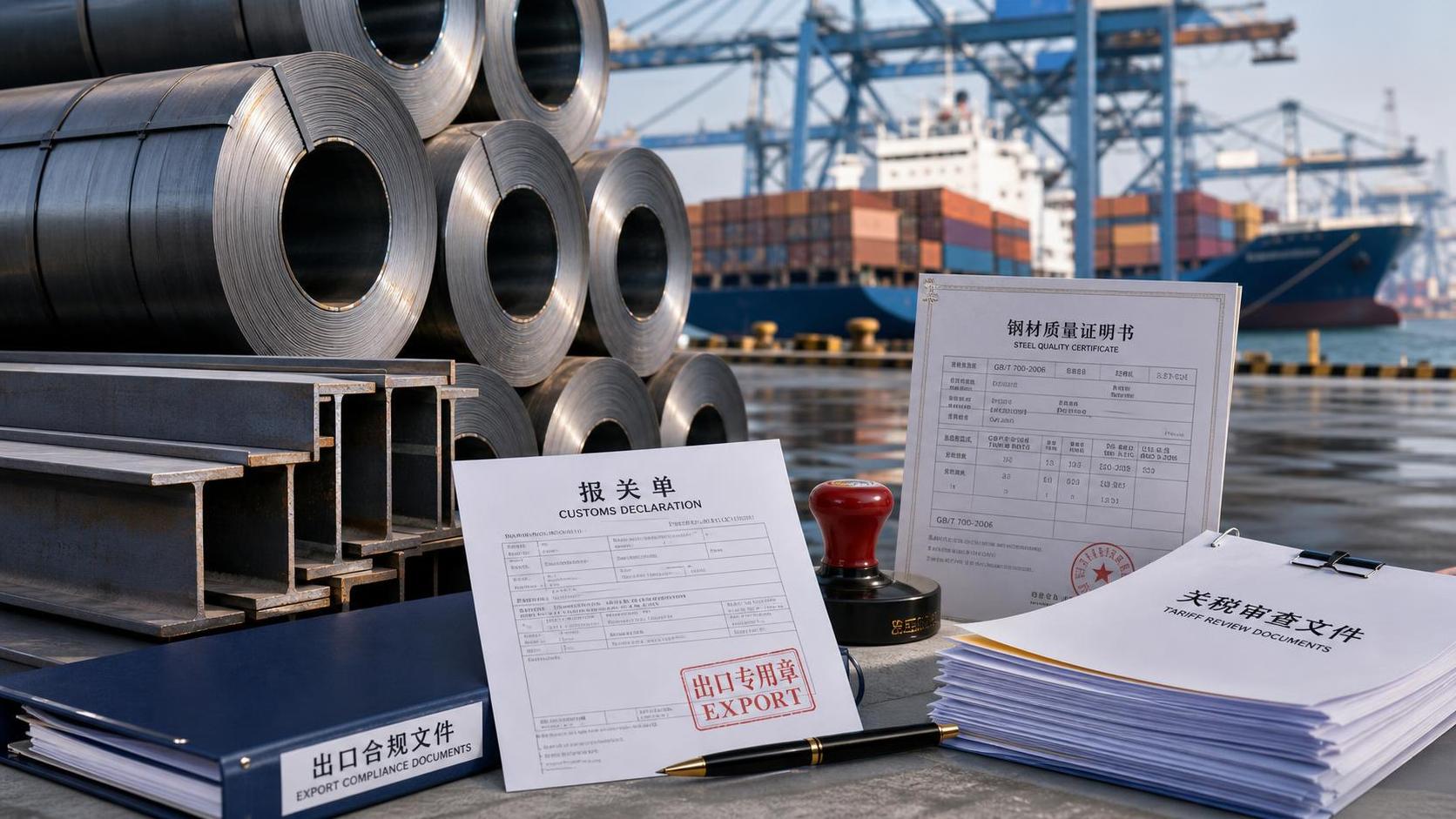
On July 17, 2026, the U.S. Department of Commerce announced an anti-dumping administrative review covering 2025 exports of hot-rolled steel products from China. For exporters, importers, procurement teams, and supply chain service providers linked to U.S.-bound steel trade, this matters because the review is expected to affect duty treatment, customs timing, and compliance costs from the second half of 2026 onward, while leaving commercial planning exposed to a result that is not expected before March 2027.
What the announcement confirms
The confirmed information is limited but commercially significant. The U.S. Department of Commerce issued the announcement on July 17, 2026 and formally opened an Administrative Review related to Chinese hot-rolled steel imports. The review covers export data for the full year of 2025. According to the provided information, the outcome will directly affect the duty rates applicable to exporters shipping to the United States in the second half of 2026, and it may also influence customs clearance timing and the compliance burden faced by overseas buyers. The result is expected before March 2027.
Where pressure may emerge across the supply chain
Export transactions may face more pricing uncertainty
Analysis shows that companies exporting hot-rolled steel products to the U.S. may need to reassess how they price shipments and structure offers for contracts tied to delivery in the second half of 2026. The reason is straightforward: when duty treatment may change after a review, commercial terms can become harder to finalize, especially where buyers expect clarity on landed cost.
Importers and buyers may see higher compliance workload
From an industry perspective, overseas importers are likely to feel the review through documentation and transaction screening. The provided information specifically highlights supplier qualifications, certificates of origin, and room for price adjustment as areas requiring earlier assessment. In practice, that means buyers may need closer checks before confirming orders, arranging customs filings, or locking in delivery schedules.
Supply chain and customs service providers may need tighter coordination
Observably, service providers involved in clearance, shipping coordination, and trade documentation may also be affected because customs timing is identified as a point of impact in the review period. Their main area of exposure is not the trade remedy decision itself, but the operational consequences if document review, origin verification, or shipment scheduling becomes more sensitive.
What companies should watch from now on
Separate confirmed procedure from future commercial outcomes
What deserves closer attention is the difference between the confirmed start of the review and the still-pending commercial result. The launch of the review is a fact; the final duty impact is not yet settled in the provided information. Companies should avoid treating the announcement itself as a final trade outcome and instead prepare for a period of uncertainty through the expected decision window before March 2027.
Recheck supplier credentials and origin documentation
The summary provided makes supplier qualification and certificates of origin immediate priorities. For importers and procurement teams, this is a practical issue rather than a formal one: if supporting documents are weak, inconsistent, or slow to provide, the review environment can translate into additional friction in customs handling and internal compliance checks.
Review price terms and adjustment space in contracts
Analysis shows that pricing flexibility deserves early attention. Since the review is expected to affect duty treatment and buyer compliance costs, both sellers and buyers may need to revisit whether existing quotations, supply agreements, or pending negotiations allow for adjustments tied to review-related changes. This is especially relevant where delivery timing extends into the second half of 2026.
Prepare for timing risk, not only rate risk
Another point that deserves attention is customs clearance timing. The provided information does not confirm specific delays, but it does identify clearance efficiency as an affected area. That makes operational preparedness important for firms managing shipment windows, customer commitments, or inventory planning linked to U.S. deliveries.
Why this remains a developing signal
Observably, this development is better understood as an active regulatory process than as a completed market result. The confirmed signal is that U.S.-bound trade in Chinese hot-rolled steel is entering a period where tariff application, documentation standards, and buyer-side compliance review may become more sensitive. Analysis shows that the industry should continue watching this case because the review period reaches back across 2025 trade data while the business effects are expected to be felt from the second half of 2026 onward.
How to read the current situation
At this stage, it is more appropriate to understand the review as a near-term operational and commercial watchpoint with potential medium-term implications, rather than as a final determination. The announcement already matters because it changes the risk environment for exporters and overseas buyers, but the final effect on duty treatment still depends on the review outcome expected before March 2027. A measured response is to focus on documentation quality, supplier screening, pricing flexibility, and delivery planning while continuing to monitor official updates.
Basis of this article and what still needs verification
This article is based on the user-provided news title, event date, and event summary regarding the July 17, 2026 announcement by the U.S. Department of Commerce on an anti-dumping administrative review of Chinese hot-rolled steel imports. For developments of this kind, relevant source categories typically include official government announcements, company disclosures, trade association updates, authoritative media reporting, and related compliance documents. A specific official source link was not provided in the input, so the underlying notice and any later procedural updates still require ongoing verification. The next point to monitor is the review process leading up to the expected result before March 2027, especially any official clarification affecting duty treatment, customs handling, and buyer compliance requirements.
By clicking 'Allow All', you agree to the storage of cookies on your device to enhance site navigation, analyze site usage and assist with our marketing efforts. Coo Cookie Notice