


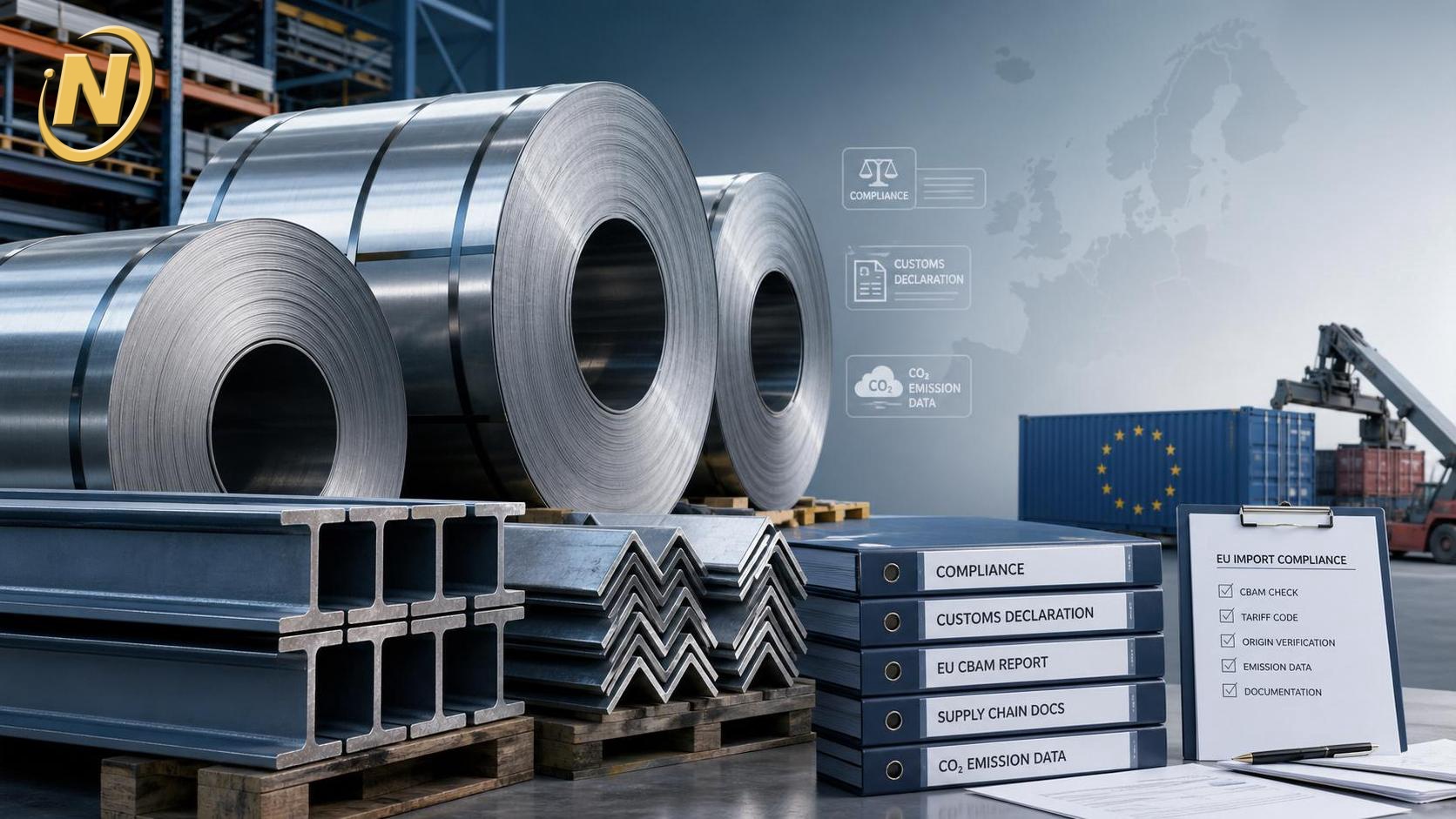
On July 1, 2026, the EU formally begins the CBAM transitional reporting requirement for steel products, creating a new quarterly carbon reporting obligation for Chinese exporters shipping steel and structural sections into the EU market. The change matters not only for exporters of products such as hot-rolled coil, H-beams, and angle steel, but also for overseas importers, procurement teams, and supply chain partners that now need closer coordination on compliance records, supplier review, and customs-related documentation.
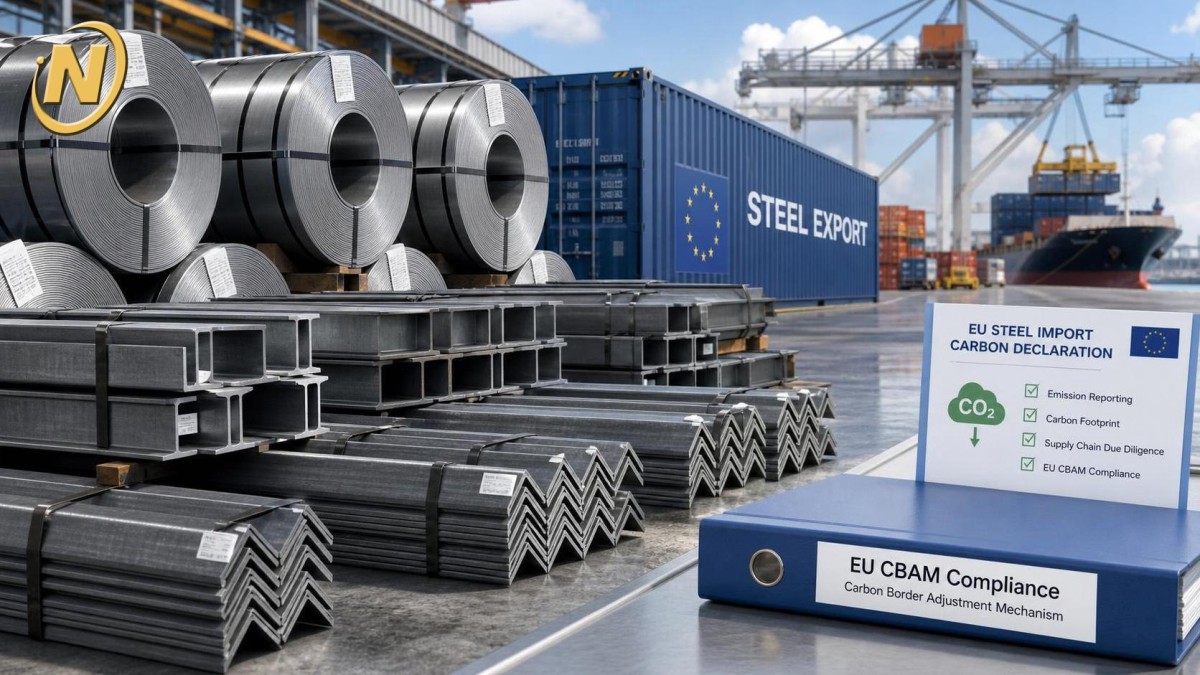
What Has Taken Effect From July 1
According to the confirmed information provided, the CBAM transitional period for steel products is fully in effect from July 1, 2026. All Chinese exporters selling steel and section products to the EU are required to submit quarterly carbon emissions reports. The covered categories include major section and steel products such as hot-rolled coil, H-beams, and angle steel. The provided information also states that non-compliant reporting may affect customs clearance and later access qualification for the formal phase. In addition, the requirement is directly tied to compliance preparation by overseas importers, coordination of procurement documents, and supplier qualification review.
Where The Operational Pressure Is Likely To Appear
Export transactions now depend more heavily on emissions reporting readiness
From an industry perspective, direct exporters are likely to feel the impact first because the new requirement sits close to the export transaction itself. The practical effect is not limited to shipment paperwork; it also affects whether quarterly emissions information can be prepared in a form that supports ongoing trade with EU buyers. What deserves closer attention is the connection between reporting compliance, customs handling, and later market access conditions referenced in the confirmed information.
Importer and procurement teams face a stronger documentation coordination burden
Overseas importers and procurement functions may be affected because the requirement is explicitly linked to supply chain compliance preparation and procurement document coordination. In practical terms, buyers may need to review whether suppliers can provide consistent emissions-related reporting support alongside ordinary transaction documentation. This may influence supplier onboarding, document review timing, and internal procurement checks tied to cross-border delivery.
Supplier qualification reviews are likely to become more detailed
Analysis shows that supplier assessment may move beyond product specifications and delivery capability alone. Because the provided information specifically mentions supplier qualification review, companies involved in manufacturing, processing, or channel supply for EU-bound steel products may need to pay closer attention to whether their compliance materials are complete, consistent, and usable within customer review processes. The immediate issue is not a new technical product standard in the summary provided, but a stronger reporting-related compliance expectation attached to trade participation.
Supply chain service providers may need to align records more carefully
Supply chain service companies involved in export support, document handling, or delivery coordination may also be indirectly affected. Observably, any party responsible for connecting exporters, importers, and shipment files may face tighter expectations around timing, consistency, and traceability of the materials used to support quarterly reporting and customs-related procedures.
What Companies Should Watch In Current Practice
Prepare reporting files in step with quarterly trade activity
Analysis shows that companies shipping covered steel categories to the EU should pay attention to whether their internal records can support quarterly emissions reporting in line with actual export activity. Since the confirmed information does not provide detailed filing procedures, this is more appropriately treated as a current compliance focus than as a settled operational model.
Review how procurement and trade documents connect across parties
What deserves closer attention is the interface between exporters, overseas importers, and procurement teams. Because the requirement directly affects procurement document coordination, businesses should watch whether existing documentation flows are sufficient for buyers' compliance review needs, especially where multiple parties handle order confirmation, shipping paperwork, and supplier records.
Track supplier qualification expectations for covered steel categories
For companies dealing in hot-rolled coil, H-beams, angle steel, and similar covered products, supplier qualification may become a more active point of review. Observably, businesses should pay attention to whether customers begin adjusting supplier screening, approval requirements, or supporting file requests in response to the reporting obligation. The input does not confirm a unified market practice, so this remains an area to monitor rather than a fixed outcome.
Watch for changes in clearance-facing and future access requirements
The confirmed information states that non-compliant reporting may affect customs clearance and later access qualification for the formal phase. From an industry perspective, this means firms should closely monitor any operational interpretation that links reporting quality, submission timing, and downstream eligibility. At this stage, it is more appropriate to understand this as a compliance signal with direct trade relevance than as a fully detailed execution framework.
How This Change Should Be Read Right Now
Analysis shows that this development is best understood as an implemented compliance change rather than a distant policy discussion. The reporting obligation has a defined start date and a direct link to customs clearance and future formal-stage access. At the same time, observably, the market still needs to follow how reporting expectations are applied in actual transactions, how procurement documentation standards evolve, and how supplier review practices are interpreted by different counterparties. For that reason, this is both a landed rule change and a continuing execution signal.
The More Immediate Meaning For The Steel Trade
From an industry perspective, the main significance of this update is that carbon reporting has moved closer to day-to-day trade operations for steel exports to the EU. The issue is no longer limited to policy awareness; it now touches shipment readiness, supplier review, buyer coordination, and future access conditions. It is more appropriate to understand this development as a practical compliance threshold that has entered real transaction workflows, while many details of market execution still deserve continued observation.
Basis Of This Article And What Still Needs Verification
This article is generated solely from the user-provided news title, event date, and event summary. Typical source categories relevant to developments of this kind may include official announcements, regulatory releases, customs or trade authority information, industry association updates, standard-setting documents, and reporting by established trade media. No specific official source link was provided in the input, so the exact official publication path still needs to be verified on an ongoing basis. Further observation is also needed on detailed implementation language, compliance interpretation, procurement document changes, supplier qualification practices, industry feedback, and how companies execute the requirement in practice.
By clicking 'Allow All', you agree to the storage of cookies on your device to enhance site navigation, analyze site usage and assist with our marketing efforts. Coo Cookie Notice