



On July 5, 2026, the U.S. Department of Commerce announced an annual administrative review of the antidumping duty order on hot-rolled coil (HRC) from China, covering exports made between January 1 and December 31, 2025. For steel exporters, U.S. importers, distributors, and supply chain service providers, the development merits close attention because it can affect applicable duty rates, customs compliance, and delivery timing for U.S.-bound business in the second half of 2026.
What the review formally covers
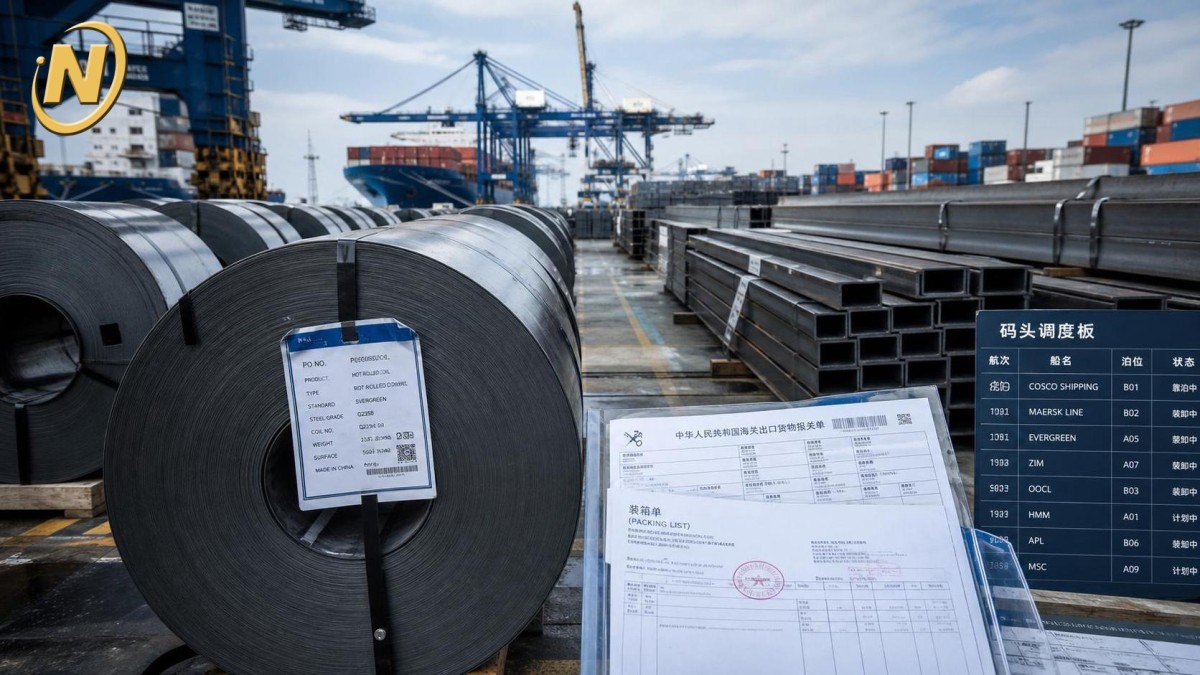
The confirmed facts are limited but commercially significant. The review was officially initiated on July 5, 2026 by the U.S. Department of Commerce and concerns the antidumping duty order on Chinese-origin HRC. Its review period covers goods exported from January 1, 2025 through December 31, 2025. Based on the information provided, the process will directly affect duty-rate application, customs clearance compliance, and shipment delivery rhythm for exporters serving the U.S. market from the second half of 2026 onward.
The same information also indicates that overseas importers and distributors should assess the risk of supplier rate changes, revisit procurement contract terms, and watch whether Chinese exporters submit response materials in pursuit of company-specific rates.
Where pressure may appear across the chain
Export-facing steel sellers may see rate and timing exposure
From an industry perspective, direct trading companies shipping HRC to the United States are the first group likely to feel the impact. The reason is straightforward: the review is tied to duty-rate application, which can influence transaction economics as well as customs processing. What deserves closer attention is not only the rate outcome itself, but also whether documentation, response filings, and shipment planning remain aligned with the review timetable.
Importers and distributors need to reassess supplier risk
For overseas importers and distribution businesses, the immediate issue is supplier-related uncertainty. Analysis shows that any change in applicable rates may alter landed-cost assumptions, margin planning, and contract execution. The practical pressure point is procurement management: buyers may need to recheck contract clauses, supplier commitments, and delivery expectations while monitoring whether Chinese exporters actively participate in the review.
Logistics and compliance service providers may face execution adjustments
Customs brokers, freight coordinators, and other supply chain service providers may also need to adjust their workflows. Observably, when a review is expected to influence customs compliance and order timing, service providers must pay closer attention to document completeness, declaration consistency, and communication between exporters and importers. The impact is less about market volume in the abstract and more about execution discipline at the shipment level.
What companies should track now
Watch for follow-up official language and procedural developments
Analysis shows that the initiation itself is not the final commercial outcome. Companies should focus on subsequent official statements, procedural requirements, and any clarification related to the covered review period and rate application. The distinction between a formal review step and a finalized business effect matters in day-to-day planning.
Check whether exporters are filing response materials
For importers and distributors, one practical checkpoint is whether Chinese suppliers submit the necessary response materials to seek company-specific rates. Based on the information provided, this is a key factor to monitor because it may shape how supplier risk is assessed in ongoing and upcoming transactions.
Revisit contract language and delivery assumptions
What deserves closer attention is the contractual side of trade execution. Businesses exposed to U.S.-bound HRC transactions may need to review terms linked to duty changes, delivery timing, and compliance responsibilities. This is especially relevant where orders are scheduled for the second half of 2026 and performance depends on predictable customs handling.
Align internal teams around documentation and customer communication
From an operational standpoint, exporters, importers, and service providers should make sure documentation flows, shipment records, and customer communication stay consistent. The issue is not only whether rates change, but whether counterparties are prepared to explain timing, compliance status, and risk allocation during the review process.
How this development is best understood at this stage
Observably, this development is better understood as an active procedural signal rather than a finalized market result. The confirmed information shows that the review has begun and that it can affect rates, compliance, and delivery timing, but it does not by itself establish a final duty outcome for every exporter. From an industry perspective, the value of this update lies in its immediate relevance to commercial planning: it tells market participants that review-related exposure now needs to be managed in real business decisions.
It is more appropriate to understand this as a development that requires continued monitoring. The current stage calls for attention to participation, documentation, and contract execution rather than broad conclusions about long-term trade direction.
Why the market should stay measured
The industry significance of this news lies in its direct connection to cross-border steel trade execution. It affects not only exporters selling HRC into the United States, but also importers, distributors, and service providers that rely on rate visibility and orderly customs processes. At the same time, the information provided supports a cautious reading: this is a meaningful procedural move with practical consequences, but it should not be overstated as a concluded result.
For now, the most balanced view is to treat the review as a near-term operational and compliance issue with possible commercial implications that will become clearer as the process develops.
Basis of this article and points for continued verification
This article is based on the user-provided news title, event date, and event summary regarding the U.S. Department of Commerce's July 5, 2026 initiation of an annual administrative review of the antidumping duty order on Chinese HRC. No specific official source link was provided in the input, so the exact official source URL remains unconfirmed here and should be continuously verified.
For this type of development, commonly relevant source categories include official government notices, company disclosures, industry association updates, authoritative media reports, and trade-related regulatory documents. The main areas for further observation are follow-up official wording, exporter participation status, and any later developments affecting duty-rate application, customs compliance, and delivery timing.
By clicking 'Allow All', you agree to the storage of cookies on your device to enhance site navigation, analyze site usage and assist with our marketing efforts. Coo Cookie Notice