


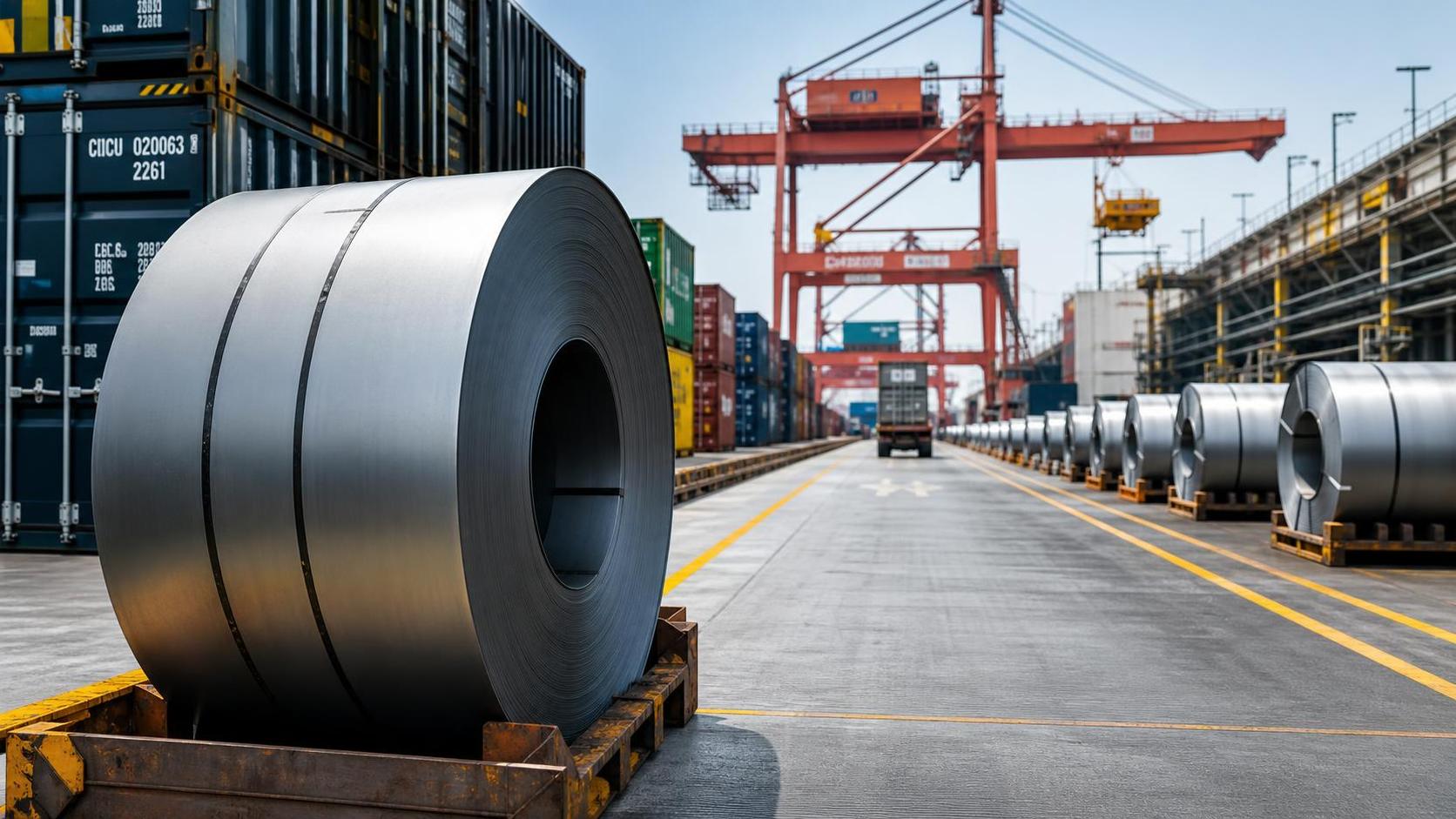
On July 23, 2026, the U.S. Department of Commerce announced a new anti-dumping administrative review covering hot-rolled steel coil from China under HS 7208.10-7208.99 for exports made between October 1, 2024 and September 30, 2025. For importers, distributors, and supply chain operators tied to this product flow, the development matters because it can affect duty exposure, customs processing speed, and document requirements at the point of entry.
What the July 23 announcement confirms
The announced action is an anti-dumping administrative review, or AAR, initiated by the U.S. Department of Commerce on July 23, 2026. The review applies to hot-rolled steel coil originating in China and identified within HS 7208.10-7208.99.
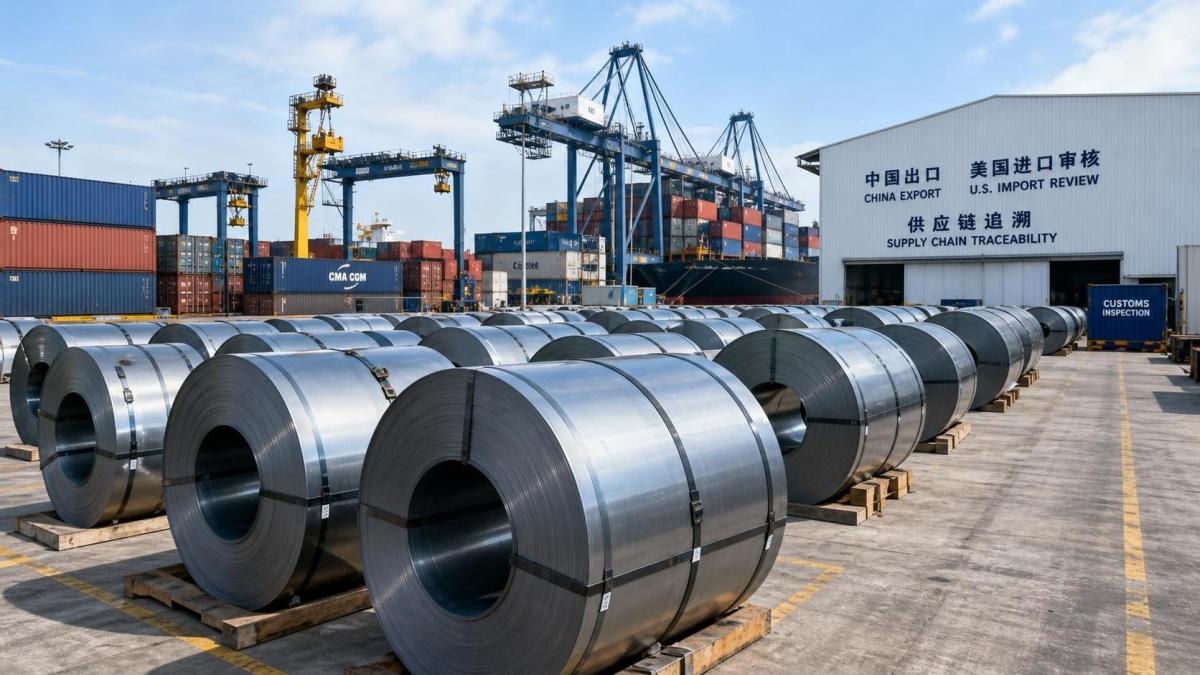
The stated review period covers exports from October 1, 2024 through September 30, 2025. According to the provided event summary, the review will recalculate duty rates for certain companies and will require importers to provide stricter proof of origin and supply chain traceability documents.
The same summary also indicates that the measure directly affects customs clearance timing in the United States, deposit ratios, and procurement costs. It further notes that distributors should check supplier compliance qualifications and the completeness of export documentation chains in advance.
Where the pressure is likely to appear first
Import-side execution becomes more document-sensitive
From an industry perspective, U.S. importers are among the first groups likely to feel the impact because the review is tied directly to customs handling, proof-of-origin review, and deposit requirements. The practical pressure point is not only tariff exposure, but also whether shipment files can withstand closer scrutiny during clearance.
Distributors face a higher verification burden
Distributors may be affected because the summary explicitly points to supplier compliance checks and document-chain completeness. Analysis shows that their exposure is concentrated in supplier onboarding, shipment acceptance, and resale planning, where missing origin records or incomplete traceability files could create delays or cost uncertainty.
Procurement teams may need to reassess landed-cost assumptions
For procurement functions buying hot-rolled coil connected to the covered trade flow, the immediate issue is not a confirmed final cost outcome, but a change in the range of possible costs. Observably, any recalculation of company-specific rates, combined with stricter supporting-document requirements, can complicate budgeting, order timing, and contract execution.
Supply chain service providers will need cleaner audit trails
Service providers involved in logistics, customs support, and trade documentation may also be affected because the event summary highlights traceability and origin evidence. What deserves closer attention is the consistency of records across shipment, supplier, and customs-facing files, since operational friction often appears where documentation standards tighten.
What companies should track now
Watch for follow-up wording and procedural detail
The current announcement confirms the review has been initiated, but companies should pay close attention to any later official wording that clarifies documentation expectations, review scope in practice, and the handling of company-specific rate adjustments. Analysis shows that the operational effect often depends on how broad requirements are applied after initiation.
Test the strength of origin and traceability files
Businesses linked to the covered product should review whether proof-of-origin materials and supply chain traceability records are complete, consistent, and easy to retrieve. This is especially relevant where multiple parties handle export, shipping, customs filing, and downstream distribution.
Separate policy signal from shipment-level execution
It is more appropriate to understand this announcement as both a policy step and an operational trigger. The policy signal is the launch of the review itself; the business impact will show up shipment by shipment through document review, clearance timing, and deposit-related cost planning.
Recheck supplier qualifications and customer communication plans
The provided summary specifically recommends advance verification of supplier compliance credentials and export document chains. Companies with U.S.-bound business in the covered category should also prepare to explain possible timing or cost changes to customers where procurement or delivery schedules could be affected.
Why this is more a process signal than a final outcome
Analysis shows that this development should not yet be read as a final market result. The confirmed fact is the start of an administrative review, together with stricter documentation expectations and the possibility of revised rates for certain companies. That makes it a meaningful compliance and cost-management signal, but not a definitive conclusion on the eventual burden each market participant will face.
Observably, the reason the industry should keep watching is that the announcement sits at the intersection of trade remedy procedure and day-to-day execution. In this kind of situation, the immediate commercial risk often comes from documentation readiness and operational timing before any broader strategic adjustment is made.
How this development is best understood now
At this stage, the July 23 action is best understood as a near-term procedural development with direct operational consequences. It already matters for import clearance, deposit planning, supplier verification, and traceability control, but it should still be treated as a developing trade-compliance issue rather than a settled market outcome.
For industry participants, the practical takeaway is straightforward: review documentation chains, verify supplier compliance standing, and monitor how the review is implemented in subsequent official communication. A measured reading is more appropriate than a broad conclusion about long-term market direction.
Basis of this article and points for continued verification
This article is based on the user-provided news title, event date, and event summary regarding the U.S. Department of Commerce's July 23, 2026 initiation of an anti-dumping administrative review on hot-rolled steel coil from China. No additional unverified facts, company names, figures, or source links have been added.
For this type of industry update, commonly relevant source categories may include official government announcements, company disclosures, industry association releases, authoritative media coverage, and standard-setting or customs-related documents. A specific official source link was not provided in the input, so further verification remains necessary. Follow-up attention should focus on later official procedural language, any clarification of documentation expectations, and how the review affects practical customs and procurement execution.
By clicking 'Allow All', you agree to the storage of cookies on your device to enhance site navigation, analyze site usage and assist with our marketing efforts. Coo Cookie Notice