


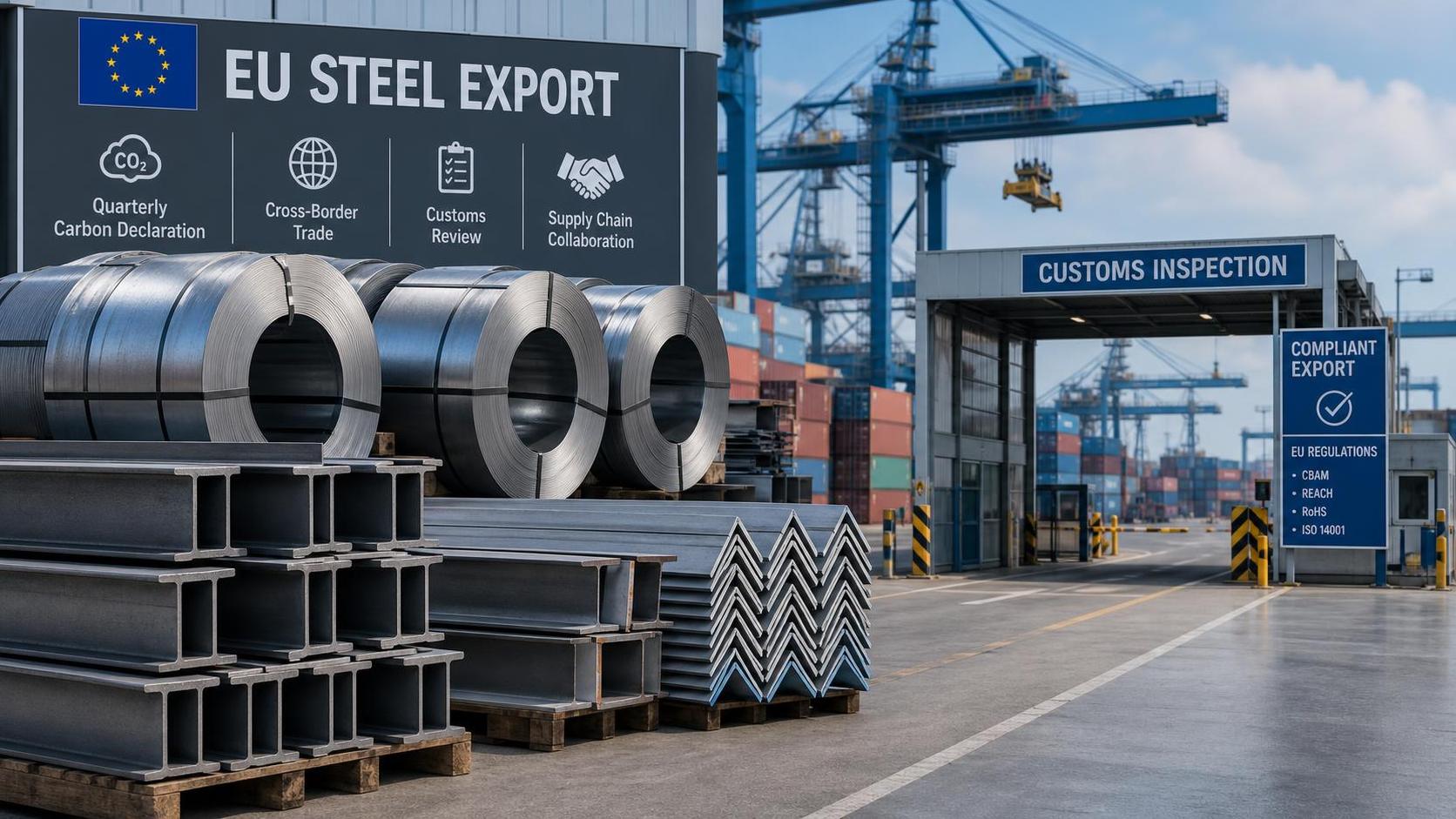
As of July 20, 2026, the EU has moved the CBAM regime for steel products into a mandatory reporting stage, making quarterly embedded carbon disclosures a practical compliance issue for companies exporting steel and structural sections into the European market. For exporters, importers, processors, and procurement teams, this matters because reporting is now tied not only to documentation requirements but also to customs clearance, market access, and supplier review in ongoing cross-border trade.
What Has Officially Taken Effect
The confirmed change is that, from July 20, 2026, CBAM reporting obligations for steel products entering the EU have entered a compulsory data-reporting phase. Companies exporting steel and section products to the EU are required to submit embedded carbon emissions data on a quarterly basis.
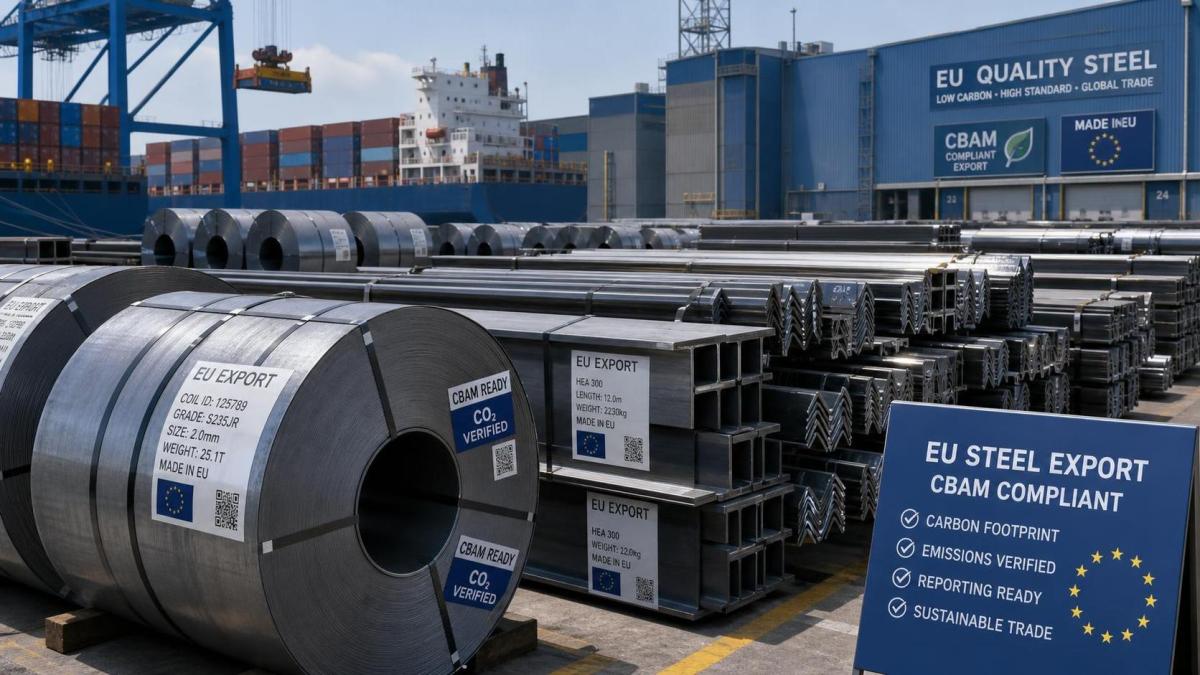
The scope described in the provided information covers major product categories including hot-rolled coil, H-beams, and angle steel. The same information also states that non-compliant declarations may affect customs clearance and market access, and may directly influence overseas importers' procurement procedures and supplier qualification reviews.
Where the Immediate Pressure Is Likely to Appear
Export-facing suppliers now face a documentation threshold
From an industry perspective, exporters of steel and structural products are likely to feel the first operational impact because the reporting requirement is directly linked to shipments entering the EU market. The pressure is not limited to filing itself; it also touches the ability to maintain uninterrupted order execution when customers or customs-related processes require complete emissions data.
Importers and procurement teams may tighten supplier screening
Analysis shows that overseas importers are likely to treat CBAM reporting capability as part of supplier assessment, since non-compliance may affect clearance and market access. In practical terms, procurement teams may pay closer attention to whether suppliers can provide quarterly embedded carbon data in a timely and consistent manner.
Processors and manufacturers may be drawn into upstream data requests
For processing and manufacturing businesses involved in hot-rolled coil, H-beams, angle steel, and related categories, the impact may appear through customer requests for product-level or shipment-level emissions information. Even where the exporter is the party filing, upstream production and processing participants may still be asked to support data preparation or verification as part of order fulfillment.
Supply chain service providers may see more compliance-sensitive coordination
Logistics, trade support, and supply chain service providers may also be affected because customs clearance and shipment scheduling can become more sensitive to whether required reporting materials are complete. What deserves closer attention is the coordination point between trade documents, supplier records, and customer-facing compliance communication.
What Companies Should Watch Closely Now
Quarterly reporting readiness for covered steel categories
Companies involved in EU-bound steel trade should focus first on whether internal processes are ready for quarterly submission of embedded carbon data for covered products such as hot-rolled coil, H-beams, and angle steel. The practical issue is not abstract policy awareness, but whether reporting can be completed in line with shipment and customer timelines.
The link between declarations and commercial continuity
The provided information makes clear that non-compliant reporting may affect customs clearance and market access. That means businesses should pay attention to the gap between having goods available for export and being able to move those goods through the required compliance pathway without disruption.
Supplier qualification and buyer communication
Because importer procurement flows and supplier qualification reviews may be directly affected, companies should watch how customers begin to ask for supporting materials, compliance statements, or reporting-related confirmations. Observably, the commercial conversation may shift from product specification alone to product specification plus reporting credibility.
Ongoing changes in wording, interpretation, and execution
It is also important to separate the confirmed rule from later implementation details. The confirmed fact is that mandatory reporting has begun for the stated steel categories and that non-compliance may affect clearance and access. What deserves closer attention is whether later official wording, customer requirements, or operating practices further refine how companies must prepare and submit the required data.
Why This Looks Like More Than a Short-Term Administrative Update
Analysis shows that this development is better understood as an operational compliance signal rather than a one-off reporting reminder. The immediate fact is the start of mandatory quarterly disclosure for embedded carbon data in steel exports to the EU. The broader industry meaning, as an observation rather than a confirmed outcome, is that emissions reporting is becoming more closely tied to transaction eligibility, supplier assessment, and day-to-day trade execution.
At the same time, it would be premature to overstate the final market impact based only on the information provided here. The current significance lies in the fact that reporting obligations now have direct implications for customs treatment and commercial access, which is why continued monitoring remains necessary.
How This Update Is Best Understood at Present
At this stage, it is more appropriate to understand the July 20, 2026 development as a clear compliance threshold for EU-bound steel trade. The confirmed change is already in force, but the full business effect will depend on how exporters, importers, and related supply chain participants adapt their reporting, qualification, and communication processes in practice.
For the industry, the key point is not simply that CBAM reporting exists, but that mandatory quarterly carbon data submission now has direct relevance to shipment continuity and market entry for covered steel products. That makes this an update with immediate practical weight and with longer-term implications still worth watching.
Basis of This Article and What Still Needs Verification
This article is based on the user-provided news title, event date, and event summary regarding the EU's formal implementation of transitional CBAM reporting obligations for steel products as of July 20, 2026.
For this type of development, relevant source categories would typically include official announcements, company disclosures, industry association updates, authoritative media coverage, and standards or compliance-related documents. A specific official source link was not provided in the input, so further verification remains necessary.
Areas that still merit continued attention include any later official clarification, interpretation of reporting practice, and changes in how importers and suppliers apply these requirements in procurement and qualification workflows.
By clicking 'Allow All', you agree to the storage of cookies on your device to enhance site navigation, analyze site usage and assist with our marketing efforts. Coo Cookie Notice