



On July 10, 2026, the European Commission formally moved the Carbon Border Adjustment Mechanism (CBAM) for steel products into its third implementation stage, bringing imported hot-rolled, cold-formed, and welded sections under a stricter filing requirement. For importers, exporters, suppliers, and compliance teams tied to steel deliveries into the EU market, the key change is that customs declarations now need certified embedded carbon emissions data for Scope 1 and Scope 2 together with proof of upstream raw-material carbon intensity. This matters because the rule change reaches beyond reporting and directly touches delivery timing, documentation readiness, clearance procedures, and cost exposure.
What the new filing requirement now covers
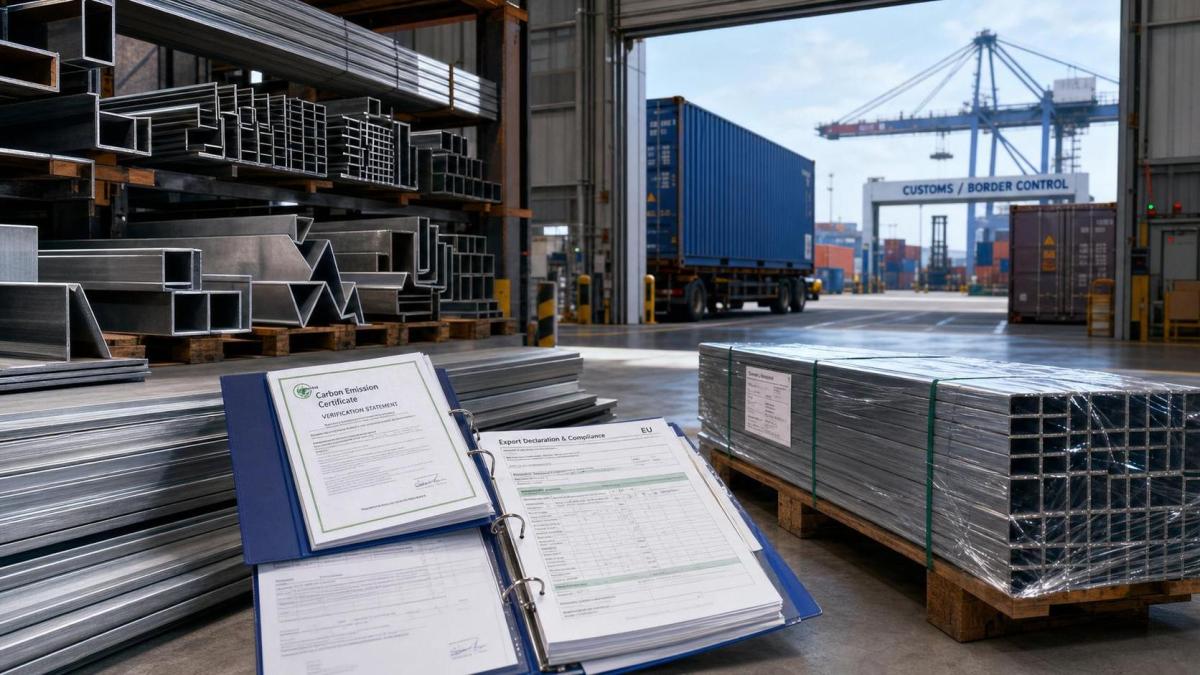
According to the provided event information, from July 10, 2026, CBAM entered its third implementation phase for steel products and applies to all imported hot-rolled, cold-formed, and welded sections. Importers are required to submit, at the time of declaration, certified embedded carbon emissions data covering Scope 1 and Scope 2, as well as supporting proof of the carbon intensity of upstream raw materials.
The same information also indicates that this change directly affects delivery cycles for Chinese steel exporters serving the EU market, as well as compliance costs and customs clearance processes. Suppliers that do not hold ISO 14067 or EN 15804 certification may face delayed release of goods or additional prepayment of carbon-related charges.
Where the pressure is likely to appear in the supply chain
Export shipments may face a documentation bottleneck
From an industry perspective, exporters shipping steel sections into the EU are likely to be affected first because the new requirement is tied to declaration timing. The practical pressure point is not only the product itself, but whether emissions data and upstream carbon-intensity proof can move together with the shipment documents. What deserves closer attention is the risk that incomplete certification support can slow customs handling and disrupt agreed delivery windows.
Suppliers of sections and upstream materials face a higher proof burden
Observably, manufacturers and material suppliers connected to hot-rolled, cold-formed, and welded sections may feel the rule change through growing demand for verifiable carbon documentation. The issue is not limited to production output; it reaches into how upstream material information is recorded, supported, and transferred to downstream trading partners. Where ISO 14067 or EN 15804 certification is absent, the commercial impact may extend into shipment release timing and cash-flow planning linked to possible carbon-duty prepayments.
Importers and trade service providers will need tighter clearance coordination
Importers, customs-facing teams, and supply-chain service providers are also exposed because the filing obligation sits at the point of import declaration. Analysis shows that coordination across logistics, compliance, and document management becomes more important when embedded emissions data and raw-material carbon proof must be available in a usable form at clearance. The immediate concern is less about long-term market structure and more about whether current workflows can support compliant and timely entry.
What companies should check now in current business practice
Review whether existing certifications are sufficient for active EU business
Analysis shows that companies involved in EU-bound steel section trade should first verify whether current supplier and product documentation already aligns with the certifications referenced in the event information, particularly ISO 14067 or EN 15804. Where such support is missing, the issue should be understood as a near-term compliance gap rather than a purely administrative matter.
Check whether shipment files can carry emissions data at declaration stage
What deserves closer attention is the timing requirement built into the declaration process. Businesses may need to examine whether commercial documents, technical files, and compliance records can be assembled early enough to avoid delays at the border. This is especially relevant for transactions where upstream raw-material information is collected from multiple parties.
Reassess delivery planning and procurement sequencing
Observably, the event points to possible changes in delivery rhythm and procurement coordination. Companies handling EU orders may need to review whether lead times, supplier qualification steps, and order confirmation practices still fit a process in which certified carbon data must accompany import declarations. This should be treated as an operational review point, not yet as proof of a uniform market outcome.
Watch for changes in customer requirements and transaction documents
It is more appropriate to understand this as a rule change that may flow into tender files, purchase specifications, supplier onboarding checks, and customs-related document requests. Even where execution details are not provided in the input, firms should pay attention to how buyers, import agents, and service providers begin reflecting the new requirement in routine trade paperwork.
Why this looks like an execution signal rather than a distant policy discussion
Analysis shows that this development is better understood as an implemented compliance step, not merely a policy direction under debate, because the event information specifies an effective date, a covered product scope, and declaration-stage submission requirements. At the same time, it remains too early to treat every commercial consequence as fully settled, since the provided information does not define all operational details of enforcement, document review, or market response.
From an industry perspective, continued attention will likely center on how certification expectations are interpreted in practice, how customs and trade-facing processes absorb the extra documentation burden, and how quickly counterparties revise commercial and technical requirements. That is where the difference between formal rule adoption and day-to-day execution will become clearer.
How this update is best understood at this stage
At this stage, the July 10, 2026 CBAM move should be read as a concrete compliance and trade-execution change for steel sections entering the EU market. The confirmed facts already point to direct effects on documentation readiness, customs timing, certification status, and possible prepayment exposure where required support is lacking. The more balanced conclusion is that the rule has moved into an operational phase, while many of the practical market responses still need to be watched through actual implementation.
Basis of this article and points that still require verification
This article is generated from the user-provided news title, event date, and event summary. For events of this kind, relevant source categories typically include official announcements, releases from regulatory authorities, customs or trade administration information, industry association notices, standard-setting documents, and reporting by authoritative media. A specific official source link was not provided in the input, so the underlying official reference still needs continued verification.
Observably, follow-up attention is still needed on detailed implementation language, certification interpretation in practice, changes in tender and procurement documents, market feedback from import and export participants, and how companies actually adjust their filing and delivery procedures after the rule takes effect.
By clicking 'Allow All', you agree to the storage of cookies on your device to enhance site navigation, analyze site usage and assist with our marketing efforts. Coo Cookie Notice