


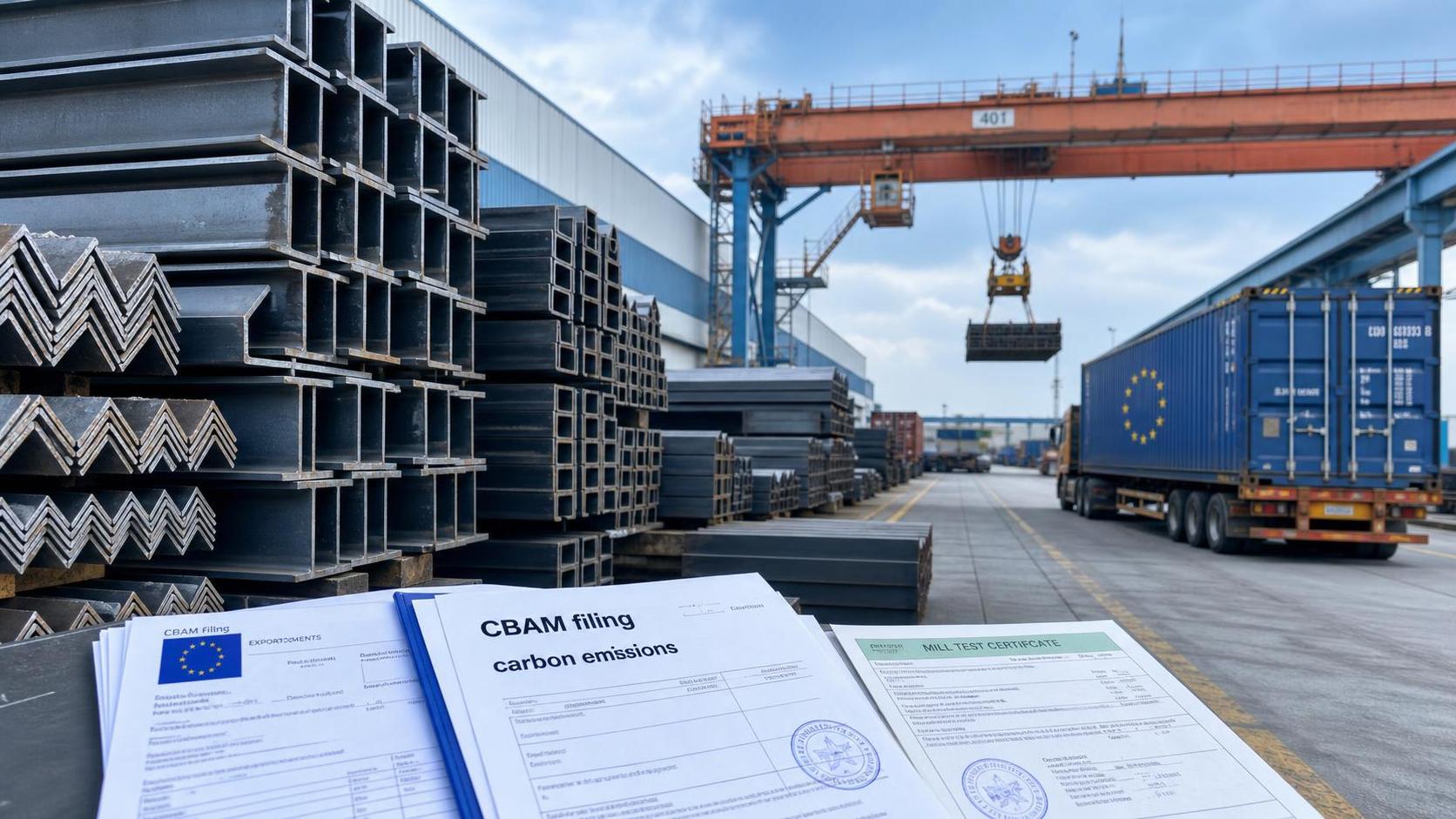
On August 9, 2026, the EU moved the CBAM process for steel products into a mandatory filing stage covering items such as hot-rolled sections, H-beams, and angle steel. From that date, suppliers exporting steel and structural profiles to the EU are required to submit certified embedded carbon emissions data through the EU CBAM portal. This development deserves close attention from exporters, overseas importers, distributors, and channel partners because the immediate compliance issue is no longer theoretical: incomplete submission may lead to customs delays and possible rejection of goods.
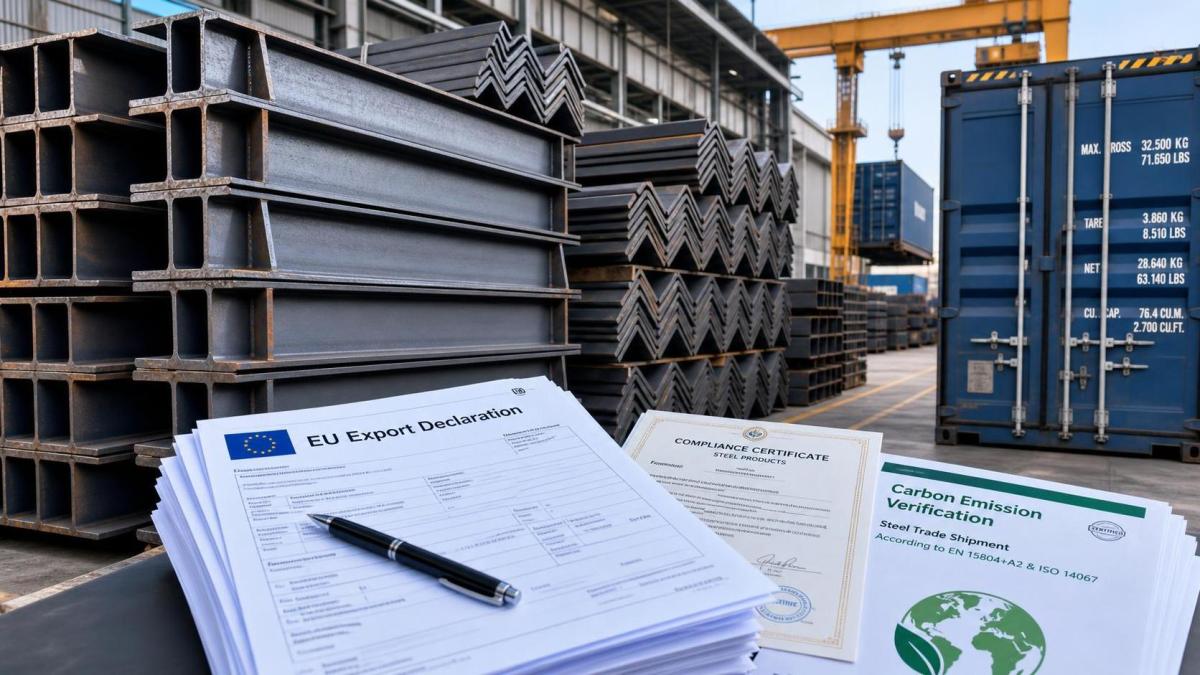
What has formally taken effect
According to the provided event information, the EU Carbon Border Adjustment Mechanism has entered a compulsory declaration phase for steel products from August 9, 2026. The scope mentioned in the input includes steel categories such as hot-rolled structural steel, H-beams, and angle steel.
The confirmed requirement is that all suppliers exporting steel products and profiles to the EU must file certified embedded carbon emissions data through the EU CBAM portal. The provided information also states that failure to complete compliant submission may result in customs clearance delays and a potential risk of refusal at the point of receipt.
The same input further confirms that the requirement directly affects overseas importers' purchasing procedures, distributors' compliance responsibilities, and the qualification standards applied to channel partners.
Where the pressure will show up across the trade chain
Export transactions now depend on document readiness
From an industry perspective, direct exporters are likely to feel the impact first because the filing obligation is tied to the shipment's ability to move through the EU entry process. The practical pressure point is no longer only price, specification, and delivery, but whether certified emissions data can be prepared and submitted in a form that matches buyer and customs expectations.
Import-side procurement gains a stronger compliance filter
For overseas importers, the change may affect supplier selection and purchase execution. Analysis shows that procurement teams will need to pay closer attention to whether a supplier can provide the required certified embedded carbon emissions data on time, because the risk described in the event summary is directly linked to clearance delay and possible non-acceptance.
Distributors and channel partners face a higher entry threshold
For distributors and channel businesses, the issue is not only product circulation but compliance accountability. Observably, if channel access is influenced by CBAM-related filing capability, then distributor qualification reviews, supplier onboarding, and order acceptance conditions may all become more document-sensitive than before.
Supply chain coordination becomes part of delivery control
Service providers and supply chain coordinators may also be affected where they support export documentation, shipment scheduling, or customer handover. The reason is straightforward: once mandatory filing is part of the transaction path, any gap between product shipment and emissions-data submission can turn into a delivery risk rather than a back-office issue.
What companies should watch now
Whether product scope and data preparation are aligned
What deserves closer attention is whether the steel categories being exported to the EU fall within the product scope described in the current event information, including structural sections such as H-beams and angle steel. Companies involved in these product lines should pay attention to whether internal shipment planning and emissions-data preparation are moving on the same timeline.
The difference between policy wording and operational execution
Analysis shows that the policy signal is clear on mandatory filing, but day-to-day business exposure will depend on execution details such as certification readiness, document completeness, and submission timing. For companies, this means the operational focus should be on how the filing requirement is translated into order handling, not only on understanding the rule at a headline level.
Supplier qualification and customer communication
Because the provided information explicitly mentions channel access qualifications and importer procurement processes, firms should pay close attention to how customers and downstream partners define acceptable compliance evidence. In practical terms, supplier qualification materials, transaction documents, and buyer communication may need to be reviewed through a CBAM compliance lens.
Delivery planning under a customs-delay risk
The event summary identifies customs delay and possible refusal risk for non-compliant submission. That means delivery scheduling, buffer time, and contingency communication deserve immediate review for businesses shipping steel products into the EU market. Even without adding assumptions beyond the input, it is reasonable to observe that timing risk has become part of commercial execution.
Why this reads as more than a routine filing update
This section is an editorial observation rather than a statement of new fact. It is more appropriate to understand this development as an operational compliance signal with direct commercial consequences, rather than as a distant policy headline. The reason is that the provided information already links filing failure to customs and acceptance risk.
At the same time, it should not be overstated into a complete market conclusion. Based on the input alone, the most defensible reading is that the rule has moved into a stage where carbon data submission becomes part of actual trade execution for covered steel exports. That makes it a concrete short-term compliance change, while its broader competitive effects still require continued observation.
How the market should interpret this stage
In summary, the August 9, 2026 milestone matters because it places certified embedded carbon emissions reporting directly into the export process for covered steel products entering the EU. For market participants, the significance lies less in abstract policy discussion and more in the fact that procurement, channel qualification, and shipment execution may now be influenced by filing readiness.
A neutral reading is that this is already a real operational requirement for affected trade flows, while the wider industry impact should still be assessed carefully as implementation develops. For now, it is more appropriate to understand the update as a near-term compliance shift with longer-term implications that remain worth tracking.
Basis of this article and points for follow-up verification
This article is based on the user-provided news title, event date, and event summary. The specific official source link was not provided in the input, so further verification is still needed against source types typically relevant to this kind of development, such as official notices, company disclosures, industry association updates, authoritative media reporting, and standards-related documents.
For continued observation, the key follow-up direction is whether later official wording, filing practice, or transaction-side implementation details create further clarification around compliance handling for steel and profile exports to the EU.
By clicking 'Allow All', you agree to the storage of cookies on your device to enhance site navigation, analyze site usage and assist with our marketing efforts. Coo Cookie Notice