


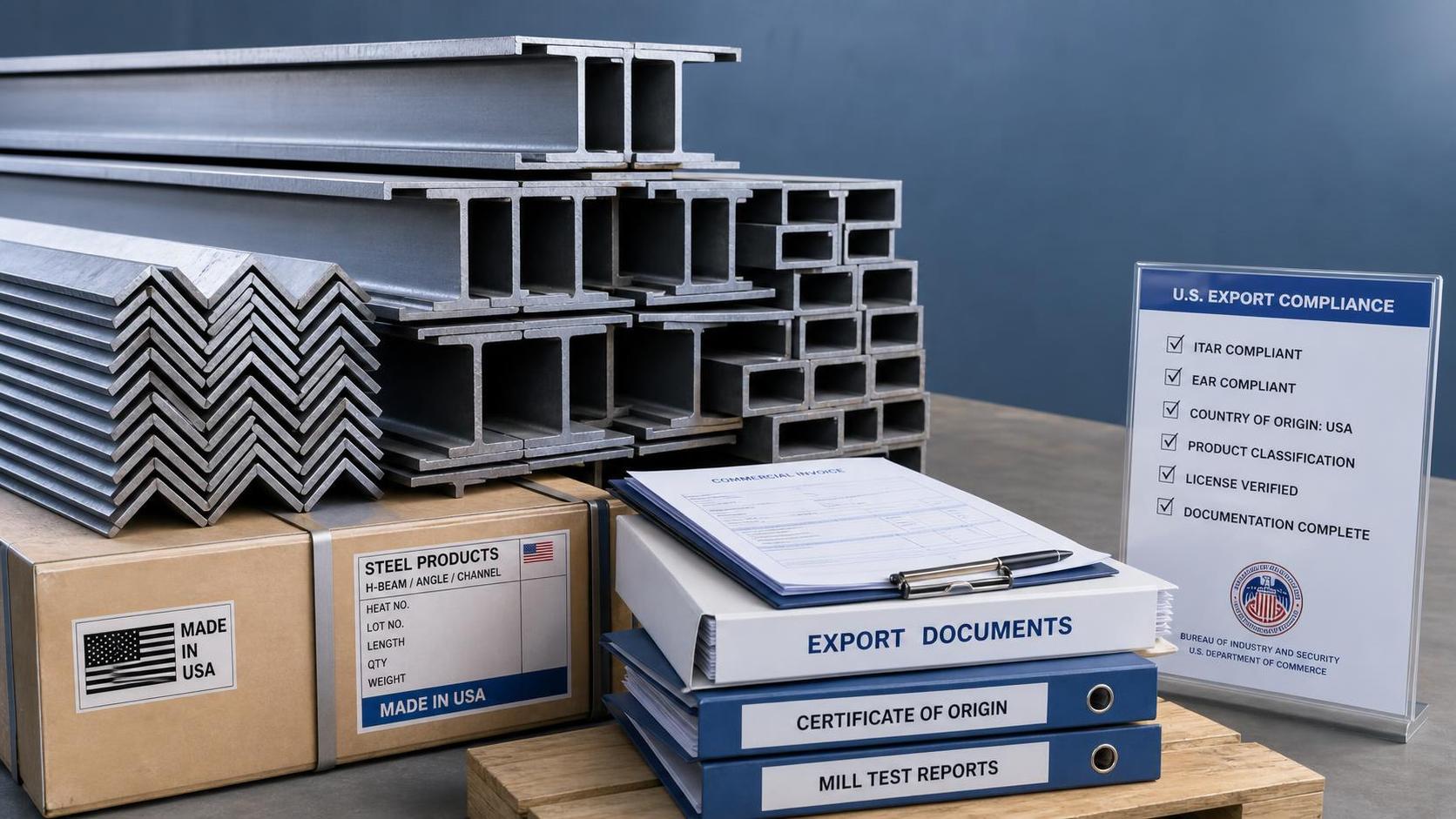
On July 27, 2026, the U.S. Department of Commerce announced the first expedited sunset review of the antidumping duty order covering hot-rolled structural sections from China, including H-beams, angles, and channels. For exporters, importers, procurement teams, and supply-chain service providers dealing with these products, the development is worth close attention because it is tied to the future compliance route for U.S.-bound shipments and to the landed cost assumptions that sit behind customs clearance and sourcing decisions.

What the announcement confirms
The confirmed facts are limited but commercially significant. The review was formally initiated on July 27, 2026 and concerns Chinese-origin hot-rolled H-sections, angle steel, channel steel, and related section products covered by an antidumping duty order. The review relates to antidumping rates set in 2021 at 127.3% to 248.6%. Based on the event summary provided, the outcome of this review will directly affect the compliance path and customs-clearance cost of relevant exports to the U.S. market over the next five years.
The same summary also indicates that importers should begin assessing alternative suppliers or consider case-specific exemption options. At this stage, that should be read as a practical compliance and sourcing consideration arising from the review, rather than as a confirmed final outcome of the proceeding.
Where the pressure may appear first in the supply chain
Export transactions tied to U.S.-bound orders
From an industry perspective, exporters of the covered steel sections may be affected first at the contract and shipment-planning level. The reason is straightforward: when antidumping exposure remains under review, pricing, delivery commitments, and customs-related responsibility become harder to lock in with confidence. What deserves closer attention is whether order acceptance, Incoterms allocation, and supporting trade documentation remain aligned with the buyer's risk assumptions.
Import-side procurement and supplier qualification
Importers and procurement teams may feel the impact through supplier selection and sourcing continuity. Analysis shows that a sunset review of this kind matters not only as a legal process but also as a purchasing signal, because future landed cost and clearance treatment can alter supplier viability. In practice, companies should pay attention to product scope confirmation, origin-related documentation, and whether current sourcing plans rely too heavily on product lines exposed to the reviewed duty order.
Processing and project delivery arrangements
Manufacturing users, fabricators, distributors, and project-based buyers that depend on these sections may be affected through delivery planning and budget control. Observably, when trade-remedy exposure is under formal review, downstream participants need to revisit whether procurement lead times, substitution plans, and stock commitments are still workable. The key issue is less about immediate market conclusions and more about whether existing delivery schedules assume a cost and clearance environment that may remain constrained.
Customs and trade compliance support functions
Supply-chain service providers, customs-facing teams, and trade compliance advisers may need to focus more closely on document integrity and transaction screening. The reason is that reviewed products typically require tighter internal confirmation of scope, origin, and shipment records. Companies operating around these flows should therefore watch for any change in filing practice, exemption-related evaluation, and internal recordkeeping standards connected with U.S.-bound entries.
Practical points companies should watch now
Check product scope against current orders
Analysis shows that the first practical task is to confirm whether existing or planned shipments fall within the reviewed product category described in the announcement summary. This is especially important for businesses handling H-beams, angles, channels, or similar section products where commercial descriptions, customs treatment, and internal product classification must stay consistent across sales, logistics, and compliance files.
Revisit cost assumptions in contracts and quotations
What deserves closer attention is whether quotations, framework agreements, and delivery budgets still reflect the duty exposure already referenced in the 2021 determination. Because the review is connected to the future compliance route and customs-clearance cost, companies should avoid treating older pricing assumptions as stable without a fresh internal review.
Prepare documentation for origin and transaction review
Observably, firms exposed to U.S.-bound trade in the covered products should ensure that origin records, commercial invoices, product descriptions, and supporting technical documents can withstand closer compliance scrutiny. The event summary does not provide detailed execution rules, so this should be understood as a precautionary compliance step rather than evidence of a newly defined documentation regime.
Monitor sourcing alternatives and exemption pathways
From an industry perspective, importers have already been signaled to evaluate alternative suppliers or explore case-specific exemption options. Since the input does not provide formal criteria or process detail, companies should treat this as an area requiring continued monitoring rather than as an immediately available operational solution. Procurement and legal teams should therefore keep sourcing flexibility under review while waiting for clearer execution signals.
How this development is best understood at this stage
Analysis shows that this event is best read as a meaningful enforcement and policy signal rather than as a completed rule outcome. The initiation of the review confirms that the antidumping order remains an active trade-compliance issue for the covered steel sections, but it does not by itself settle every commercial consequence for each transaction. It is more appropriate to understand this as a live regulatory process that requires businesses to reassess exposure, keep documentation ready, and watch closely for how the review is carried through in practice.
Observably, the most important question for the market is not simply whether a review has begun, but how companies adapt their procurement, pricing, and customs planning during the review window. That is why follow-up attention to official wording, operational interpretation, and market response remains necessary.
Why the market should stay measured
The significance of this development lies in its direct connection to long-term export compliance and import cost management for covered steel sections entering the U.S. market. At the same time, the current information supports a cautious reading: the review has been initiated, the historical antidumping rates cited in the summary remain central to the issue, and affected businesses should prepare for compliance and sourcing implications without assuming a final commercial result in advance.
It is more appropriate to understand this update as an active trade-rule development with practical consequences for contracts, customs planning, supplier review, and delivery risk management. That makes continued monitoring more important than broad market conclusions at this stage.
Basis of this article and what still needs verification
This article is based on the user-provided news title, event date, and event summary. For developments of this type, the source categories usually relevant include official government notices, releases from regulatory or trade authorities, customs or trade administration updates, industry association materials, standard-setting documents where applicable, and reporting from established media covering trade enforcement.
No specific official source link was provided in the input, so the exact official publication reference still needs to be verified on an ongoing basis. Observably, the points that merit further tracking include any detailed official wording, the practical enforcement interpretation, possible changes in tender or procurement documents, market feedback from affected participants, and how companies implement sourcing, exemption review, and compliance adjustments in response.
By clicking 'Allow All', you agree to the storage of cookies on your device to enhance site navigation, analyze site usage and assist with our marketing efforts. Coo Cookie Notice