



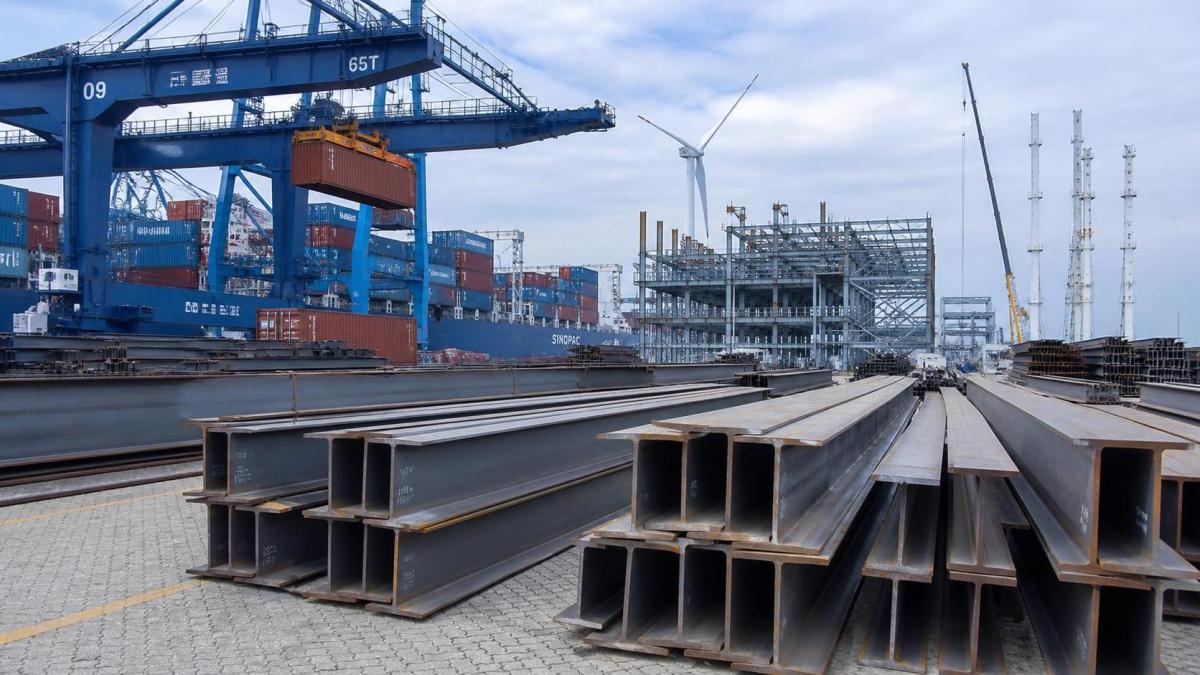
On August 15, 2026, the U.S. Department of Commerce formally opened an anti-dumping investigation into H-beam steel originating in China, including products under HS codes 7216.31 and 7216.32. Because these sections are widely used in overseas infrastructure, industrial plant construction, and structural supports for new energy projects, the case deserves close attention not only from exporters but also from importers, procurement teams, customs compliance functions, and project delivery participants that rely on stable cross-border supply.
What Has Been Confirmed So Far
The confirmed facts are limited but commercially significant. According to the input information, the investigation was initiated on August 15, 2026 and targets Chinese-origin H-beam steel. The products involved include HS codes 7216.31 and 7216.32, among others. The affected product range is described as being broadly used in overseas infrastructure works, industrial factory buildings, and structural applications for new energy support systems.
The same input also confirms that the case is expected to directly affect U.S. market access, customs clearance compliance, and pricing strategy for Chinese profile steel exporters. It further indicates that importers need to prepare in advance for response coordination, origin documentation, and cost restructuring arrangements.
Why This Matters Across Trade and Delivery Chains
For exporters serving the U.S. market
Analysis suggests that Chinese exporters of H-beam steel may face immediate pressure in market entry planning and transaction structuring. The most direct area of concern is not only whether shipments can continue in the same way, but also how product classification, origin records, pricing logic, and customer communication will need to be reviewed during the investigation process. From a compliance perspective, businesses should pay closer attention to whether existing document sets can support a consistent explanation of product scope, origin, and cost basis.
For U.S.-side importers and customs-facing teams
From an operational perspective, importers are likely to be among the first parties required to react. The input information specifically points to the need for response coordination, origin proof, and cost reconstruction. This means importers may need to examine whether supplier files, transaction documents, and supporting origin materials are sufficiently complete for customs and trade-review purposes. At this stage, it is more appropriate to understand this as a preparation signal rather than a confirmed final compliance outcome.
For project buyers, contractors, and integrators using structural steel
Where H-beam steel is tied to infrastructure, industrial buildings, or new energy support structures, procurement and delivery planning could come under pressure if trade procedures become more complex. Analysis suggests that buyers and project contractors may need to recheck lead times, bid assumptions, and supplier commitments where U.S.-bound supply is involved. The practical issue is less about broad market speculation and more about whether planned sourcing and delivery arrangements remain workable under tighter trade scrutiny.
For supply-chain service providers
Logistics, customs, and trade support providers may also see a higher documentation burden. Observation suggests that coordination around declarations, origin records, and shipment-level compliance could become more sensitive. Even without confirmed downstream rule changes in the input, service providers should expect that customers may ask for clearer audit trails and more structured document readiness tied to the products under review.
What Companies Should Review Now
Recheck origin and product-scope documentation
The first practical task is to review whether origin evidence and product descriptions are internally consistent across commercial, customs, and technical records. Since the input specifically highlights origin proof, companies should verify whether documentation can support the declared origin and product scope without contradiction. This is a verification step, not a statement that any new formal documentation rule has already been issued.
Prepare for coordinated case response
The reference to importer response coordination indicates that counterparties may need aligned positions on product classification, transaction history, and supporting records. Companies involved in the affected trade flow should assess who holds the key documents, how quickly they can be assembled, and whether internal commercial and compliance teams are working from the same factual file.
Review pricing logic and cost structure assumptions
The input states that pricing strategy and cost restructuring are directly implicated. From an industry perspective, this suggests companies should revisit whether existing quotations, long-term supply terms, or project budgets still reflect the level of trade risk now present. That does not mean a specific cost impact has been confirmed; it means the pricing basis may require a fresh review under the new investigation environment.
Check procurement and delivery exposure on active business
For businesses with U.S.-linked orders, what deserves closer attention is whether current procurement plans, shipment timing, and customer commitments depend on assumptions that may now need adjustment. Companies should assess active tenders, open orders, and near-term delivery schedules to identify where additional documentation, commercial discussion, or sourcing verification may be needed.
How This Should Be Read at This Stage
This development is best understood as an execution-level trade signal with immediate compliance relevance, rather than as a fully settled end state. The confirmed fact is the opening of an anti-dumping investigation. The downstream commercial effects, however, will depend on how the case proceeds, how counterparties respond, and whether procurement and customs practices change in day-to-day execution.
Analysis also suggests that this is not only a question for steel exporters. Because the products are used in project-based structural applications, the case may influence document review standards, supply planning, and bid discipline across several business functions. The most important point for the industry is to separate confirmed facts from assumptions and to monitor how trade execution language evolves in actual transactions.
A Practical Reading for the Market
Based on the information provided, the market should treat this case as a material compliance and trade-management development for Chinese H-beam steel connected to the U.S. market. It does not yet justify broad conclusions beyond the confirmed initiation itself, but it does justify early review of origin support, case coordination readiness, pricing assumptions, and delivery exposure.
At this stage, it is more appropriate to approach the development as a rule-related change that has entered active execution, while recognizing that further interpretation will depend on subsequent official wording, trade practice, and industry response.
Basis of This Article and What Still Needs Verification
This article is generated solely from the user-provided news title, event date, and event summary. No additional facts, case numbers, company names, figures, or external links have been added. For events of this type, market participants would typically continue to verify information through sources such as official notices, regulatory releases, customs or trade authority updates, industry association communications, standard-setting documents, and reporting from established media.
No specific official source link was provided in the input, so any formal source text and subsequent procedural detail still require ongoing verification. What remains worth monitoring includes later policy detail, compliance interpretation, tender-document changes, trade execution developments, market feedback, and how affected companies implement their response in practice.
By clicking 'Allow All', you agree to the storage of cookies on your device to enhance site navigation, analyze site usage and assist with our marketing efforts. Coo Cookie Notice